Edit Your Book Like a Pro Without Losing Your Voice, Your Mind, or Your Budget
Everything you need to polish your manuscript to professional standards, self-editing guides, editor comparisons, and insider tips from published authors.
- Used by published authors
- 100% Free resources
- No fluff, just systems
Welcome to the ultimate command center for editing your book.
You’ve poured your heart and soul onto the page, and now you’re facing the most crucial phase of your author journey: turning a rough draft into a polished, professional manuscript that readers can’t put down. But where do you even begin? The world of editing is complex, filled with confusing terminology, expensive services, and conflicting advice. It’s enough to make any author feel overwhelmed.
We’ve been there. That’s why we created this comprehensive hub.
This isn’t just another blog post; it’s a complete, multi-level resource designed to guide you through every single stage of the editing process. Below, you’ll find six core sections—your roadmap from first draft to final proofread. Each section is packed with in-depth advice, actionable strategies, and honest comparisons to help you make smart decisions. We’ll show you how to self-edit like a pro, how to decide which type of professional editor you need (and where to find them), how to work with beta readers, and how to avoid the costly mistakes that plague so many authors.
Whether you’re on a shoestring budget or ready to invest in a top-tier professional, this is your starting point. Dive into the section that speaks to you most, or work through them in order to build a complete foundation of editing expertise. Let’s get started.
Edit Your Book Topics
Click below below to jump straight to the topic.

Your Complete Editing Roadmap: From First Draft to Polished Manuscript

Congratulations, author! You did it. You typed “The End” on your first draft, and the feeling is a potent cocktail of pure exhilaration and sheer terror. You’ve climbed the mountain, and now you’re standing at the summit, looking at a sprawling, untamed wilderness of words.
This is where the real magic begins. This is where you transform a story only you can see into a manuscript the world will love. Welcome to the editing roadmap.
Editing isn’t a single, dreaded task you power through in a weekend. It’s a strategic, multi-stage journey that takes your rough draft and methodically shapes it into a professional, publication-ready book.
Think of it less like cleaning a messy room and more like crafting a masterpiece from a block of marble. Each stage of editing has a distinct purpose, and doing them out of order is like painting a house before the walls are built, a waste of time, money, and creative energy.
This roadmap will guide you through The Different Stages of Editing, help you understand How to Plan Your Editing Timeline, and show you how to budget effectively, whether you’re self-editing or Hiring a Professional Editor.
The Big Picture
Before you dive in with a red pen, it’s crucial to understand that editing happens in layers. You can’t fix plot holes and typos in the same pass. Trying to do so will only lead to frustration and burnout. The professional approach is to work from the biggest picture down to the smallest details. Let’s break down the four core layers of the editing process.
First is Developmental Editing, also known as structural editing. This is the 30,000-foot view of your story. A developmental editor (or you, in a self-editing capacity) isn’t looking for comma splices; they’re asking the big questions. Does the plot make sense? Are the character arcs compelling and believable? Is the pacing working, or does the middle sag?
This is where you address major structural issues and ensure the foundation of your story is solid. It’s the most intensive and transformative stage, and it’s where you’ll decide if a chapter needs to be moved, a character needs to be cut, or the ending needs a complete rewrite.
We have a detailed guide that explains Developmental vs. Line vs. Copy Editing to help you pinpoint exactly what you need first. Next comes Line Editing. Once your story’s structure is sound, you zoom in on the prose itself. Line editing is the art of making your writing sing.
Editing layers pyramid developmental line copy proofread
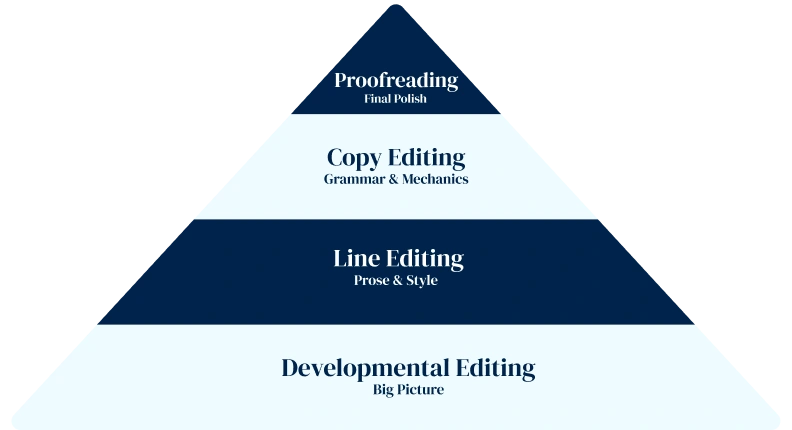
It focuses on the flow and rhythm of your sentences, your word choices, the consistency of your authorial voice, and the overall emotional impact of your language. A line editor helps you eliminate weak verbs, cut unnecessary adverbs, and ensure your dialogue sounds authentic. This isn’t about being grammatically perfect (that’s next); it’s about making your writing powerful and elegant. You can learn to do this yourself with our guide on The Art of Line Editing: From Good to Great Prose.
After the prose is polished, it’s time for Copy Editing. This is the technical, rules-based stage that most people think of when they hear “editing.” A copy editor is a grammar expert who hunts down spelling errors, punctuation mistakes, and inconsistencies. Did you spell a character’s name two different ways? Do you switch between past and present tense? A copy editor will catch it.
While AI tools like Grammarly and ProWritingAid are incredibly helpful at this stage for catching common errors, they can’t replace the nuanced understanding of a human expert. Our comparison on AI Editing Tools vs. Human Editors breaks down the pros and cons of each.
Finally, there is Proofreading. This is the last line of defense before your book goes to print or gets published. After the book has been formatted for publication, a proofreader does one final pass to catch any lingering typos, formatting glitches, or embarrassing mistakes that everyone else missed.
It’s a meticulous, detail-oriented job that ensures your final product is flawless. Don’t skip this step; readers are surprisingly unforgiving of typos. Our Ultimate Proofreading Checklist will help you catch every last error.
Planning Your Journey
How to Create an Editing Timeline
Now that you understand the stages, how long will this all take? The honest answer is: it depends. The editing timeline for a 50,000-word novella is vastly different from that of a 150,000-word epic fantasy.
However, you can create a realistic schedule by breaking it down. First, and most importantly, you need to let your manuscript rest. After finishing your first draft, put it away for at least two to four weeks. This “cooling off” period gives you the critical distance needed to see your work with fresh eyes. Our guide on Why Taking a Break Makes You a Better Editor explains the psychology behind this essential step.
Once you’re ready to return, your first pass should be a Self-Edit. Read your entire manuscript from start to finish without making any changes. Just take notes. This is your first read-through as a reader, not a writer.
Identify major plot holes, pacing issues, and anything that feels “off.” This initial assessment will inform your entire editing plan. From there, you can block out time for each editing stage. A reasonable timeline might look like this:
book editing timeline template 6 month schedule
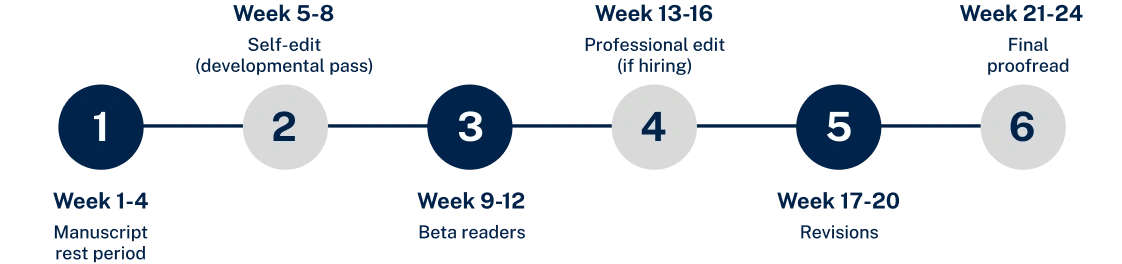
This process can take anywhere from three to six months. Don’t rush it. Rushing leads to costly mistakes and a book you’re not proud of. We’ve created a Free Downloadable Editing Schedule Template you can customize for your project.
If you’re using project management software like Scrivener or Asana, you can build this timeline directly into your workflow. Our tutorial on Organizing Your Writing Projects with GHL shows how you can even manage this process with more advanced automation tools.
Pro tip:
Never hire a proofreader before a developmental editor. It's like washing your car before driving it through a mud puddle. Developmental edits will require major rewrites, which means any copy editing or proofreading done beforehand is wasted money. Always edit from the macro (big picture) to the micro (details).
Budgeting for Your Edit
DIY vs. Hiring a Pro
Editing can be one of the biggest expenses in publishing a book, but it’s also one of the most important investments. The cost can range from zero (if you do everything yourself) to several thousand dollars. Your budget will depend on your genre, word count, and the level of professional help you want.
If you’re on a tight budget, you can absolutely learn to be a competent self-editor. Our hub on Self-Editing Strategies That Work is dedicated to teaching you the techniques professionals use. By combining powerful software like ProWritingAid with a deep understanding of story structure and prose, you can produce a very clean manuscript.
However, no author can see their own work objectively. We all have blind spots. That’s where beta readers and critique partners become invaluable. They provide the fresh eyes needed to spot issues you’ve become blind to. If you have the budget, hiring a professional editor is the single best thing you can do to improve your book and your craft. Editors don’t just fix your manuscript; they teach you how to be a better writer.
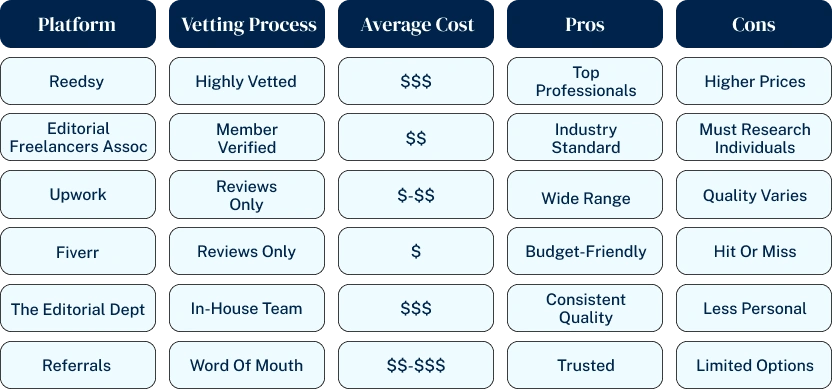
When you’re ready to hire help, you’ll need to know Which Type of Editor You Need and where to find them. Freelance marketplaces like Reedsy and Upwork are popular options, but there are also boutique editing companies. Our guide on How to Find and Vet a Freelance Editor provides a checklist of questions to ask and red flags to watch out for.
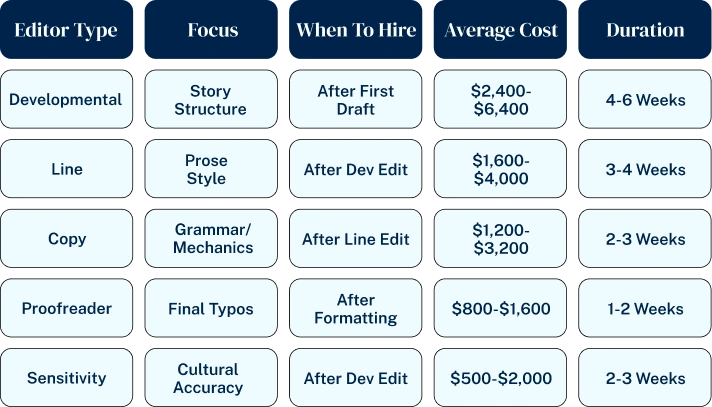
Here’s a rough breakdown of what you might expect to pay for professional editing services:
Editing Type | Cost per Word | 80K Novel Cost | DIY Alternative |
|---|---|---|---|
Developmental | $0.03-$0.08 | $2,400-$6,400 | Beta readers + self-edit |
Line Edit | $0.02-$0.05 | $1,600-$4,000 | ProWritingAid + critique partners |
Copy Edit | $0.015-$0.04 | $1,200-$3,200 | Grammarly Premium |
Proofread | $0.01-$0.02 | $800-$1,600 | Fresh eyes + read-aloud |
These are industry averages and can vary widely. We Compare Top Editing Services in another one of our hubs to give you a more detailed breakdown.
Ultimately, the decision to hire an editor is a personal one based on your goals and your budget. Whether you choose the DIY path or invest in a professional, this roadmap gives you the framework to move forward with confidence.
You’ve already done the hard work of writing the book. Now, it’s time to polish it into something that shines.
Pro tip:
You don't need to hire for all four editing stages. Many authors get excellent results by self-editing with tools like ProWritingAid, hiring a developmental editor for big-picture feedback, then using beta readers and a final proofread. This "hybrid approach" can cut your editing costs by 60% while still producing a professional manuscript.

Which Type of Editor Do You Need? Decoding the Roles to Build Your Dream Team

types of book editors comparison chart roles costs
1. The Architect
The Developmental Editor
A developmental editor (sometimes called a structural or substantive editor) is your story’s architect. They are concerned with the big-picture elements of your manuscript. They read your book with an eye for structure, plot, character development, pacing, and overall coherence.
They are the first editor you should hire, and you should only hire one after you have completed a full draft and done at least one round of self-revision.
- What they do: A developmental editor provides an in-depth editorial letter (often 10-20 pages long) that analyzes your story’s strengths and weaknesses. They’ll identify plot holes, point out inconsistent character motivations, question pacing issues, and suggest potential solutions. They don’t fix your sentences; they fix your story.
- When you need one: You should hire a developmental editor if you feel your story has foundational problems. Maybe you know the ending is weak, a main character feels flat, or the plot just doesn’t quite hang together. Our guide, “When Your Story Needs Structural Help: 5 Signs You Need a Developmental Editor,” can help you decide.
- What to expect: Expect big-picture feedback that will require significant rewriting. It can be tough to hear, but this feedback is what transforms a decent story into an unputdownable one. Learn more in our deep dive: What to Expect From a Developmental Editor.
2. The Stylist
The Line Editor
If the developmental editor is the architect, the line editor is the interior stylist. Once the structure is solid, the line editor goes through your manuscript line by line to make your prose sing.
Their focus is on the craft of writing: your voice, tone, and the rhythm and flow of your sentences. They are masters of language who elevate your writing from merely functional to truly artistic.
- What they do: A line editor will tighten sentences, clarify meaning, eliminate clichés, and enhance your authorial voice. They’ll flag awkward phrasing, repetitive sentence structures, and weak word choices. They might suggest reordering a paragraph for better flow or cutting a sentence that adds nothing to the narrative.
- When you need one: Hire a line editor after you’ve completed all your developmental edits and are confident in your story’s structure. If you feel your writing is clear but lacks punch, or if you struggle with crafting beautiful sentences, a line editor is an invaluable partner. For a closer look, read Understanding the Difference: Copy Editing vs. Line Editing.
- What to expect: Your manuscript will come back with a high volume of tracked changes, but they will be focused on the sentence level. Your story won’t change, but the way you tell it will become infinitely more powerful.
3. The Technician
The Copy Editor
The copy editor is the detail-oriented technician of your editing team. Their job is to ensure your manuscript adheres to the rules of grammar, spelling, punctuation, and syntax.
They are focused on correctness and consistency. While a line editor makes your writing beautiful, a copy editor makes it correct.
- What they do: A copy editor will fix grammar mistakes, correct spelling and punctuation, and ensure consistency in things like character names, timelines, and world-building details. They create a style sheet for your book to track these decisions (e.g., is it “grey” or “gray”?). They are the ones who catch that your character’s eyes were blue in chapter one but brown in chapter ten.
- When you need one: You need a copy editor after all line edits are complete. The manuscript should be very close to its final form. While tools like Grammarly and ProWritingAid are excellent for a first pass, a human copy editor is essential for a professional-quality book. Our article Why You Still Need a Human Editor in the Age of AI explores this further.
- What to expect: A manuscript that is clean, consistent, and free of embarrassing grammatical errors. They follow a specific style guide, usually the Chicago Manual of Style for fiction.
4. The Quality Inspector
The Proofreader
The proofreader is the final checkpoint before publication. Their job is not to edit, but to catch any errors that have slipped through the previous stages. Crucially, proofreading should be done on the final formatted version of your book (the print-ready PDF or the final ebook file).
This allows them to catch formatting errors, bad line breaks, or glitches that occurred during the design phase.
- What they do: A proofreader compares the formatted version against the edited manuscript to ensure no new errors were introduced. They catch leftover typos, punctuation mistakes, and formatting issues.
- When you need one: Always. This is the last, non-negotiable step. Hire a proofreader after the book is designed and you think it’s perfect. You’ll be amazed at what a fresh pair of eyes can find. Our Final Proofreading Checklist is a great resource for this stage.
- What to expect: A short list of final corrections to be made before you hit “publish.” It’s the final polish that gives you peace of mind. Learn more about What Proofreaders Actually Do (and Don’t Do).
book editing workflow process order of editors
Pro tip:
You can often find editors who combine services. A "line and copy edit" package is common and can save you 20-30% compared to hiring separately. Just make sure the editor is qualified for both—ask to see samples of their work at each level before committing.
Specialized Editors
Building Out Your Team
Beyond the core four, a number of specialized editors have emerged to meet specific author needs. You may not need any of these, but it’s important to know they exist.
Editor Type | What They Do | When You Might Need One |
|---|---|---|
Sensitivity Reader | Reads for authentic and respectful representation of marginalized groups. | If you are writing a character or culture outside of your own lived experience. |
Critique Partner | A fellow writer who provides feedback, usually in exchange for you critiquing their work. | At any stage, but especially helpful before hiring a professional editor. |
Book Coach | A hybrid of an editor and a coach who guides you through the writing process. | If you are stuck, struggling with motivation, or need accountability. |
Acquisitions Editor | An editor who works for a publishing house and decides which books to acquire. | You don’t hire them; you submit your work to them (usually via a literary agent). |
Deciding to bring on a Sensitivity Reader is becoming a standard part of the ethical writing process for many authors. It’s an act of due diligence to ensure your portrayal of a specific culture, identity, or experience is not harmful or based on stereotypes. Our guide, “How to Work with a Sensitivity Reader,” walks you through the process.
Finding a good Critique Partner can be a game-changer. These are trusted peers who can provide invaluable feedback long before you spend any money. Websites like Scribophile and the Absolute Write Water Cooler are great places to find them.
And if you’re looking for more hands-on guidance throughout the writing process, a Book Coach might be the perfect investment. Many coaches, like those found on Reedsy, offer services that blend developmental editing with project management and moral support.
Ultimately, the team you build is up to you. But by understanding what each editor does, you can make informed decisions, invest your resources wisely, and give your book the best possible chance of success. Now that you know the players, our next hub, Compare Top Editing Services, will help you decide where to find them.
Pro tip:
Before hiring a developmental editor, complete at least one full self-edit pass using a story structure framework like Save the Cat! or The Story Grid. This ensures you're not paying an editor $3,000 to tell you things you could have caught yourself with a $20 book. Save the editor's expertise for the nuanced, hard-to-see problems.

Compare Top Editing Services: Freelancers vs. Companies vs. AI Tools

Now that you can confidently identify which type of editor you need, the next question is: where do you find them? The market for editing services is vast, with options ranging from freelance editors on sprawling marketplaces to boutique agencies, and even sophisticated AI software.
Each path has its own distinct advantages, disadvantages, and price points. Making the right choice depends on your budget, your timeline, your genre, and how much hands-on management you’re willing to do.
This section is a comprehensive comparison of the top editing services and platforms available to authors today. We’ll give you an honest look at the pros and cons of hiring a freelancer versus working with an established company. We’ll explore the burgeoning world of AI editing tools and help you understand where they shine and where they fall short.
Our goal is to demystify the hiring process, help you spot the red flags of a bad editor, and give you the confidence to invest your money wisely. Whether you have a four-figure budget for a top-tier professional or you’re trying to get the most bang for your buck with a hybrid AI-and-human approach, this guide will help you navigate the options.
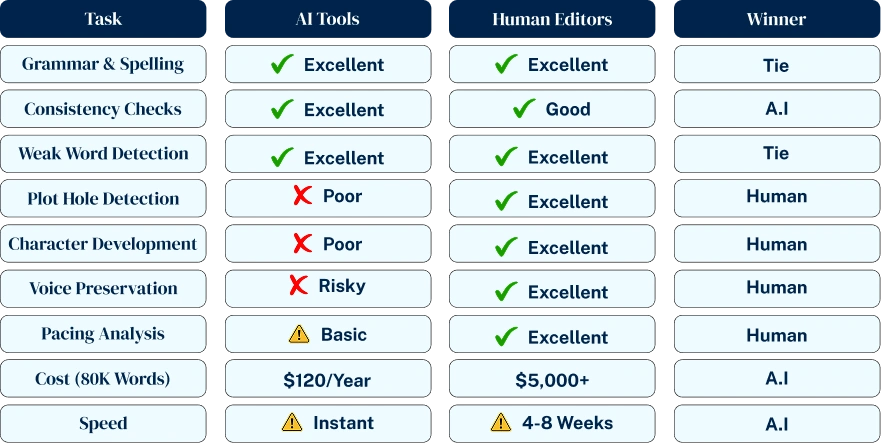
aI editing tools vs human editors comparison chart
The Three Main Paths
Freelancers, Agencies, and AI
Your search for an editor will likely lead you down one of three main avenues. Let’s break them down.
The Freelance Marketplace
Power to the People
This is the most common path for indie authors. Platforms like Reedsy, Upwork, and Fiverr have created curated marketplaces where you can browse thousands of freelance editors, view their portfolios, read reviews, and request quotes.
This approach gives you the most control, allowing you to hand-pick the perfect professional for your specific project.
- Pros: You get a direct relationship with your editor, which often leads to a more personalized experience. The competition on these platforms can also lead to more competitive pricing. Platforms like Reedsy are highly curated, meaning their editors are vetted professionals with extensive experience.
- Cons: The sheer number of options can be overwhelming. You are responsible for vetting the editor, negotiating terms, and managing the project. While many freelancers are excellent, there is a risk of hiring someone who is unprofessional or unqualified, especially on less-curated sites. Our guide on How to Find and Vet a Freelance Editor is essential reading if you go this route.
- Best For: Authors who want maximum control, enjoy the vetting and hiring process, and are looking for a specific type of expertise for their genre.
The Editing Company
The All-in-One Solution
Editing companies or agencies act as the middleman. They have a roster of editors on staff and handle the project management for you. You submit your manuscript, they assign it to an appropriate editor, and they manage the deadlines and deliverables.
Companies like FirstEditing and The Editorial Department have been in the business for years and have established reputations.
- Pros: This is often the simplest and fastest option. The company does the vetting for you, so you have a baseline guarantee of quality and professionalism. They also have project managers to handle any issues that arise.
- Cons: This path is typically more expensive, as the company takes a cut. You often have little to no say in which specific editor is assigned to your project, which can lead to a less personal connection.
- Best For: Authors who are short on time, value convenience over control, and want the peace of mind that comes with a managed service.
AI Editing Software
Your Robot Assistant
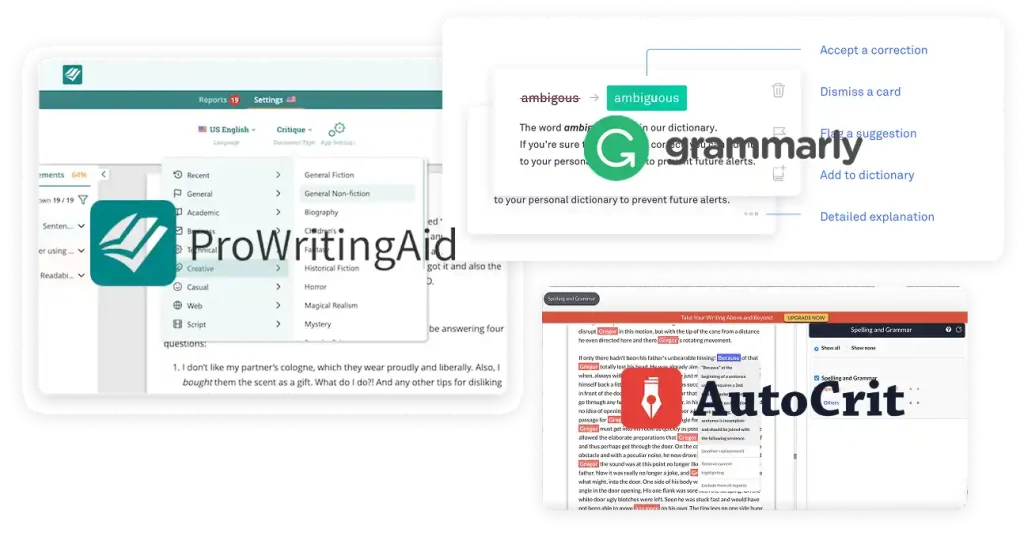
In the last few years, AI-powered editing software has become incredibly powerful. Tools like ProWritingAid, Grammarly, and AutoCrit can analyze your manuscript in minutes, providing feedback on everything from grammar and spelling to style, pacing, and dialogue.
They are not a replacement for human editors (especially for developmental and line editing), but they are an indispensable tool for self-editing
- Pros: They are incredibly fast and affordable (usually a low annual subscription). They are fantastic for catching typos and grammatical errors, strengthening your prose, and ensuring consistency. They can teach you a lot about your own writing habits.
- Cons: AI lacks the nuance and contextual understanding of a human. It cannot tell you if your plot is compelling or if a character’s emotional arc is working. It can sometimes give bad advice or miss the stylistic intent of your prose.
- Best For: Authors on a tight budget who are committed to intensive self-editing. It’s also an essential tool for all authors to use before sending their manuscript to a human editor to clean up the easy-to-fix mistakes.
Pro tip:
Run your manuscript through ProWritingAid BEFORE sending it to a human editor. This can reduce your editing bill by 30-40% because the editor won't waste time fixing basic grammar issues. They can focus on high-value feedback like plot, character, and prose style—which is what you're really paying for.
Platform Comparison
Where to Find Your Editor
Platform | Type | Best For | Price Range | Key Feature |
|---|---|---|---|---|
Reedsy | Curated Freelancers | Finding top-tier, vetted professionals for any genre. | $$$ – $$$$ | Highly curated marketplace; only the top 5% of applicants are accepted. |
Fiverr Pro | Curated Freelancers | High-quality freelancers with a slightly broader price range than Reedsy. | $$ – $$$$ | Pro-vetted talent pool ensures a higher level of quality and professionalism. |
Upwork | General Freelancers | Finding editors on a budget, if you’re willing to do extensive vetting. | $ – $$$ | Huge talent pool with a wide range of skills and price points. |
ProWritingAid | AI Software | In-depth style, grammar, and consistency checks for self-editing. | $ | Integrates with Scrivener and other writing software; lifetime deal available. |
Grammarly | AI Software | Best-in-class grammar, spelling, and punctuation correction. | $ | Excellent user interface and browser extensions for everyday writing. |
Pro tip:
Don't blindly accept every AI suggestion. ProWritingAid might flag your intentional sentence fragments or stylistic choices as "errors." Your job is to review each suggestion and decide if it serves your story. AI is a tool, not a boss. Use the "Ignore" button liberally to preserve your unique voice.
The Hybrid Approach: The Best of Both Worlds
For many authors, the most effective and cost-efficient strategy is a hybrid approach. This involves using AI tools to their full potential first, and then hiring a human editor for what they do best.
- First Pass with AI: After you’ve finished your self-edit, run your entire manuscript through ProWritingAid. Use its 20+ reports to fix grammatical errors, eliminate weak words, check for repetitive sentence structures, and analyze your pacing. This step alone will dramatically improve your manuscript and save your future editor a significant amount of time.
- Hire for a Specific Need: Now that your manuscript is clean, you can hire a human editor to focus on the big picture. If you’re worried about your plot, hire a Developmental Editor for a manuscript critique. If you’re confident in the story but want your prose to shine, hire a Line Editor. Because you’ve already handled the copy-editing basics, the editor can focus on higher-level feedback, giving you more value for your money.
aI editing tools vs human editors comparison chart
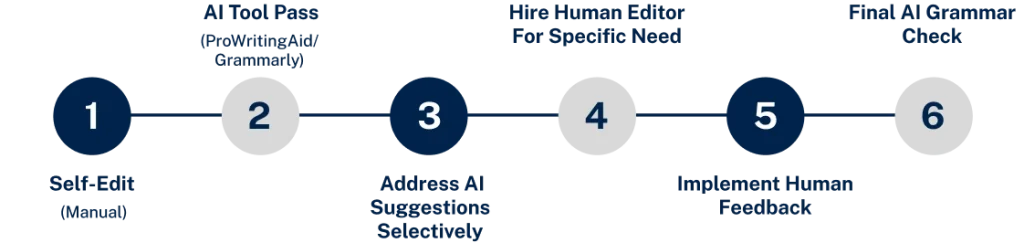
This hybrid strategy allows you to leverage the speed and affordability of AI while still benefiting from the irreplaceable nuance and wisdom of a professional human editor. It’s the smartest way to allocate your editing budget in the modern publishing landscape.
For a step-by-step guide, check out our article: “How to Combine AI and Human Editors to Create a Bestselling Book.”

Self-Editing Strategies That Work: How to Polish Your Manuscript Like a Pro

Professional editing is an invaluable investment, but it shouldn’t be the first line of defense for your manuscript. Before you hand your work over to an editor, and before you spend a single dollar, there is a huge amount of progress you can and should make on your own.
This is the self-editing phase, and it is arguably the most critical stage for your growth as an author. It’s where you learn to look at your own writing with a critical eye, where you bridge the gap between the story in your head and the words on the page, and where you save yourself a significant amount of money by delivering a cleaner, stronger manuscript to your future editor.
Many authors dread self-editing because they feel they lack the skills or objectivity to do it effectively. But self-editing isn’t about being perfect; it’s about making your book better. It’s a methodical process of cleaning, tightening, and clarifying your work.
This section provides a treasure trove of proven self-editing strategies that will empower you to strengthen your prose, fix structural problems, and catch embarrassing errors. From the game-changing “read-aloud” method to powerful techniques for cutting unnecessary words, these tips will transform your editing process from a chore into a craft.
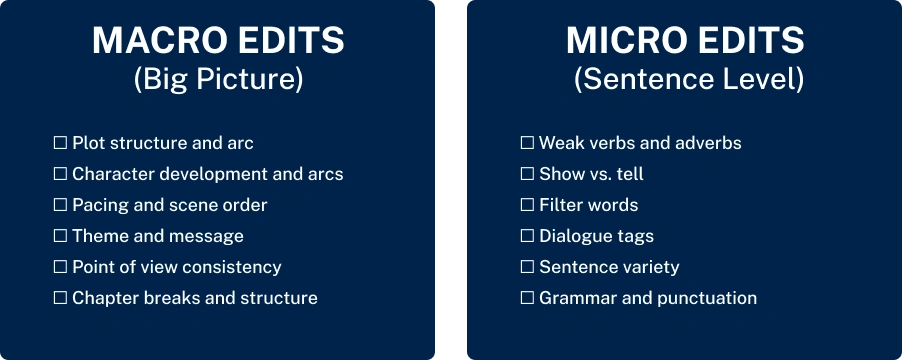
macro vs micro editing checklist self editing guide
The Foundation: Mindset and Preparation `
Before you can effectively edit your work, you need to switch from your “writer brain” to your “editor brain.” The writer brain is creative, expansive, and generative. The editor brain is critical, analytical, and reductive. You cannot be both at the same time.
This is why the most important self-editing tip is to Take a Break After Your First Draft. As we mentioned in the roadmap, stepping away from your manuscript for at least two to four weeks is non-negotiable.
This fallow period allows you to return to the work with fresh eyes, enabling you to spot plot holes and awkward sentences that were invisible to you before.
Once you return, your first step is to Read Your Book Like a Reader. Print it out or send it to an e-reader. Read it from start to finish in as few sittings as possible. Do not stop to fix typos or rephrase sentences. Your only job is to experience the story as a whole.
Keep a notebook handy and jot down high-level impressions. Where were you bored? Where were you confused? Which characters fell flat? This initial read-through will give you your high-level revision checklist. For a more structured approach, use our First-Read-Through Checklist to guide your note-taking.
Macro Edits: Fixing the Big Picture

Your first round of active self-editing should always focus on the big picture, or the “macro” elements. This is your developmental edit, where you work on the story’s foundation.
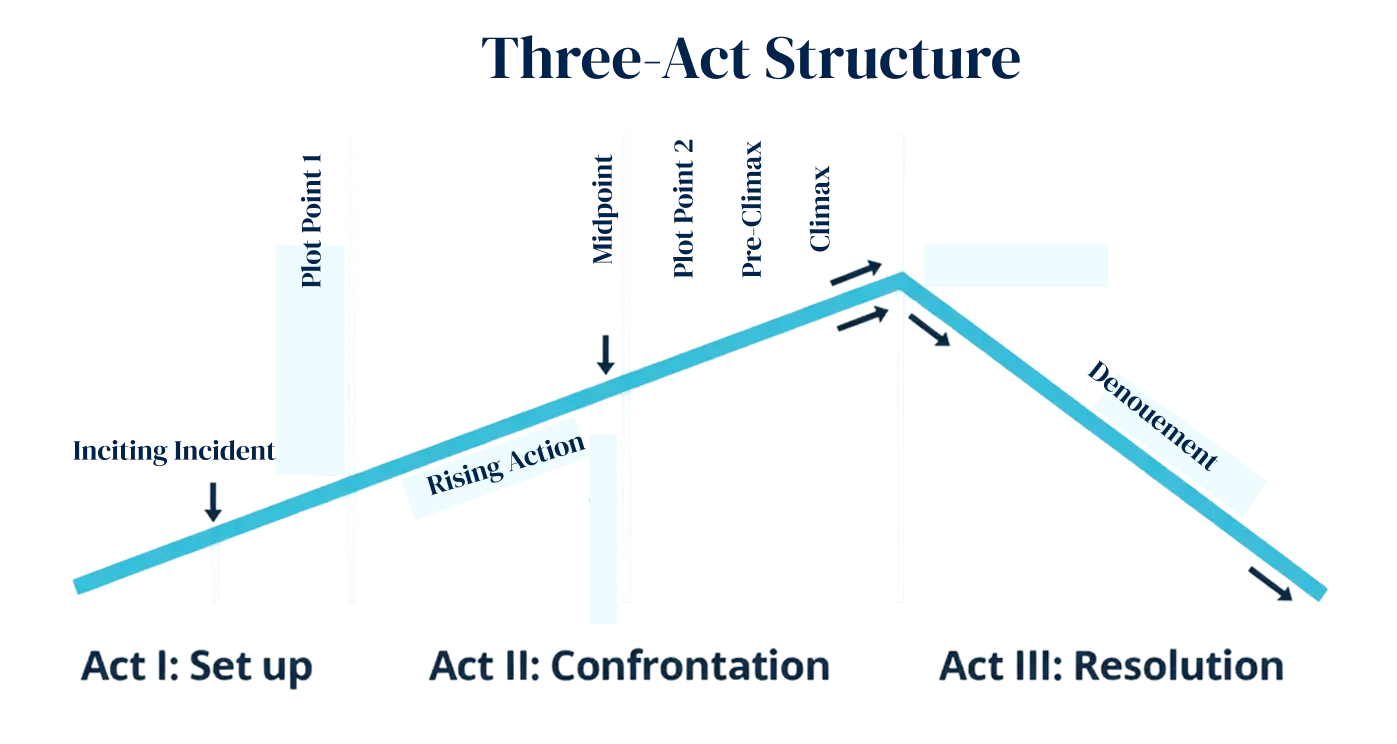
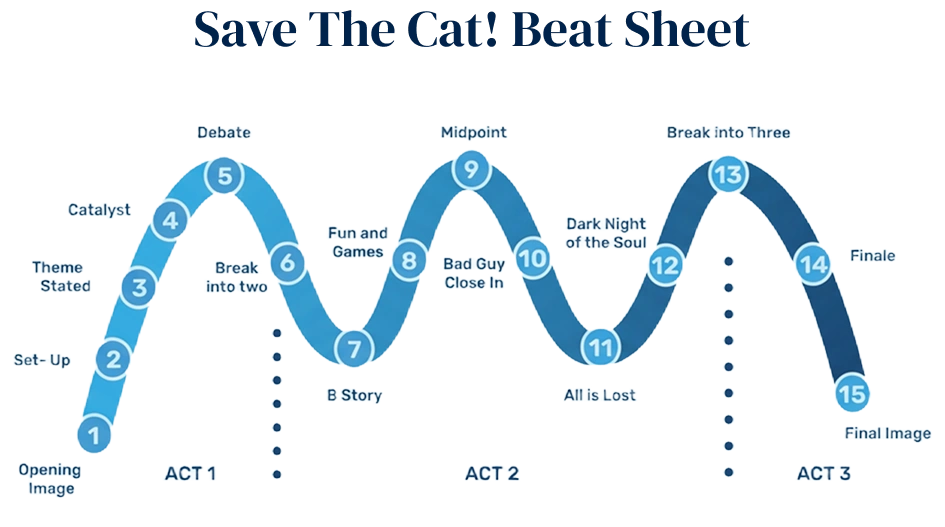
- Story Structure and Plot: Does your story follow a clear and satisfying arc? Use a story structure framework like the Three-Act Structure or Save the Cat! Writes a Novel to map out your plot points. Do you have a clear inciting incident, rising action, climax, and resolution? Look for plot holes, gaps in logic or events that don’t make sense. Our guide on How to Identify and Fix Plot Holes can help.
- Character Arcs and Motivation: Are your characters believable? Does your protagonist have a clear goal and strong motivation? Do they change and grow over the course of the story? Track the arc of your main characters from beginning to end. Ensure their choices are driven by their established personality and motivations, not just the needs of the plot. Check out our deep dive on Crafting Compelling Character Arcs.
- Pacing and Scene Structure: Pacing is the rhythm of your story. A well-paced book alternates between high-tension scenes and moments of slower reflection. Read through your manuscript and identify which scenes are essential and which can be cut. Every scene should either advance the plot or reveal character. If a scene does neither, it needs to go. Learn more in our article on The Art of Ruthless Cutting: How to Know What to Delete.
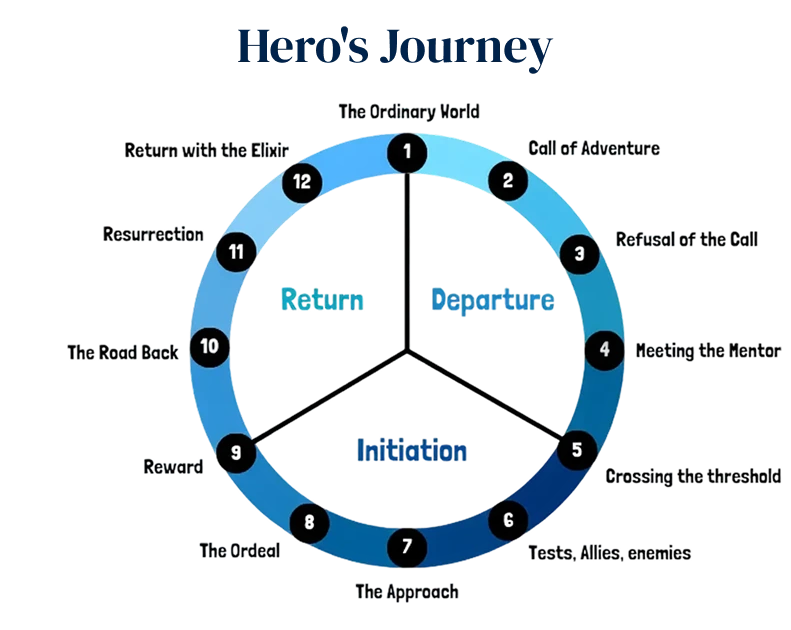
story structure frameworks three act save the cat heroes journey
Pro tip:
Print your entire manuscript and read it on paper, not a screen. Studies show we catch 20-30% more errors on paper than on screens. Use a red pen to mark plot holes, pacing issues, and scenes that drag. This analog approach forces you to slow down and see your story differently.
Micro Edits: Polishing at the Sentence Level

Once you’re confident in your story’s structure, it’s time to zoom in on the prose. This is the “micro” editing stage, where you polish your manuscript line by line.
- The Read-Aloud Method: This is the single most effective self-editing technique. Reading your manuscript out loud forces you to slow down and hear the rhythm of your prose. You will instantly catch awkward phrasing, clunky dialogue, and overly long sentences that you would otherwise skim over. For even better results, use a text-to-speech tool like the one built into Microsoft Word or Google Docs to have your computer read it to you. This creates another layer of distance and helps you hear the text objectively. Learn Why Reading Aloud Catches More Mistakes in our detailed guide.
- Strengthen Your Prose: This involves a targeted hunt for common writing weaknesses.
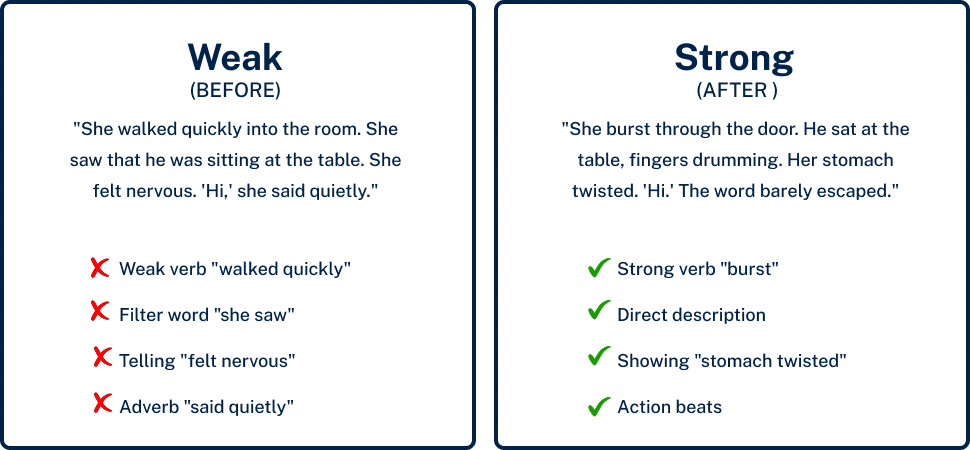
- Eliminate Weak Verbs and Adverbs: Search for adverbs (words ending in “-ly”) and challenge every single one. Instead of “she ran quickly,” can you use a stronger verb like “she sprinted” or “she dashed”?
- Show, Don’t Tell: This is classic writing advice for a reason. Instead of telling the reader “he was angry,” show it through his actions: “he slammed his fist on the table.” Our guide “Show, Don’t Tell in Action” provides dozens of examples.
- Cut Filter Words: Filter words are verbs that distance the reader from the character’s experience (e.g., “she saw,” “he heard,” “they felt”). Instead of “she saw the car speeding towards her,” write “the car sped towards her.”
- Consistency Checks: Create a Character Bible or Style Sheet to track important details. This can be a simple document where you note a character’s eye color, the spelling of a fantasy city, or the rules of your magic system. This will help you avoid embarrassing consistency errors. You can use a simple tool like Google Sheets or the notebook feature in Scrivener for this.
before after editing example show don’t tell strong verbs
Pro tip:
Create a "Search and Destroy" list of your personal weak words. Common culprits: just, really, very, quite, somewhat, rather, actually, literally. Use your word processor's Find function to locate every instance, then challenge yourself to cut 80% of them. Your prose will instantly become 30% stronger.

How to Work With Beta Readers: Your Secret Weapon for a Better Book

As an author, you will inevitably lose all objectivity when it comes to your own work. After months or even years spent with your characters and your plot, you know the story inside and out. You know what a character is thinking even if you haven’t written it down, you understand the subtle foreshadowing you planted in chapter two, and you can’t see the glaring plot hole in chapter ten because your brain automatically fills in the gaps.
This is where beta readers come in. They are your secret weapon, your first audience, and one of the most powerful, cost-effective editing tools at your disposal. Beta readers are volunteers who read your unpublished manuscript and provide feedback from a reader’s perspective. They aren’t editors; they’re test readers. Their job is to tell you where the story is working and, more importantly, where it isn’t.
They’ll tell you if the pacing drags, if a character is unlikable, if the plot is confusing, or if the ending is unsatisfying. This section is your complete guide to working with beta readers. We’ll cover where to find them, how to manage them without losing your mind, what questions to ask to get useful feedback, and how to graciously handle the criticism that will inevitably come your way.
Finding Your First Readers: Friends vs. Strangers
Your first instinct might be to send your manuscript to your mom, your best friend, or your spouse. While their encouragement is wonderful, they are often the worst beta readers.
They love you, and because they love you, they will either be afraid to hurt your feelings or they won’t have the critical eye needed to give you honest, constructive feedback. For the best results, you need to find unbiased readers who have no personal connection to you.
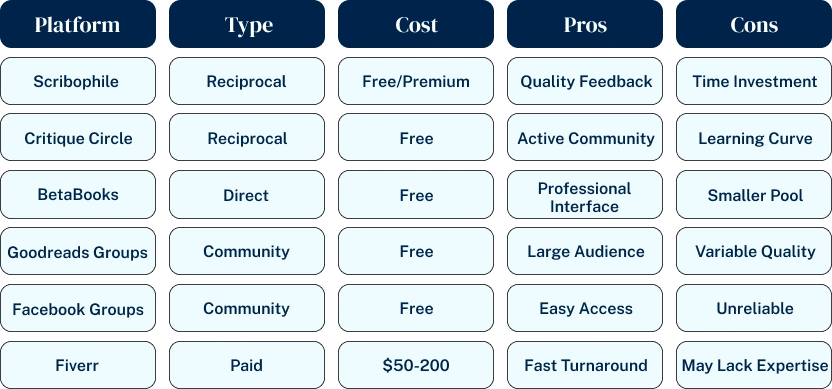
- Where to Find Beta Readers: The internet is your best friend here. There are numerous communities dedicated to connecting authors with beta readers.
- Writing Communities: Websites like Scribophile and Critique Circle are built on a system of reciprocity. You earn credits by critiquing other writers’ work, which you can then spend to have your own work critiqued. This is a fantastic way to get detailed feedback from fellow writers.
- Social Media: Facebook has dozens of groups dedicated to beta reading (search for “beta readers” or “beta reading exchange”). You can also find readers on Twitter and Instagram by using hashtags like #BetaReaders or #WritingCommunity.
- Goodreads: The Goodreads Beta Reader Group is a large and active community where you can post a request for readers for your specific genre.
- Friends vs. Strangers as Beta Readers: While strangers are generally better, it’s okay to have one or two trusted friends in the mix, as long as you preface it by saying you need their honest, critical feedback. Our guide “Where to Find Quality Beta Readers for Your Genre” offers more specific resources.
where to find beta readers platform comparison scribophile goodreads
Pro tip:
Never use only friends and family as beta readers. They love you and don't want to hurt your feelings, which means they'll either be too nice or too harsh. Instead, find 3-5 readers in your target genre who don't know you personally. Scribophile and Goodreads groups are perfect for this.
Managing the Process: How to Avoid Chaos
Managing a team of five to ten beta readers can quickly become chaotic if you don’t have a system. You’ll be juggling different file versions, tracking feedback from multiple sources, and trying to make sense of conflicting advice. A clear, professional process is essential.
- Set Clear Expectations: Before you send a single page, provide your beta readers with a clear instruction sheet. This should include:
- A Brief Synopsis: Give them a one-paragraph summary of the book so they know what they’re getting into.
- The Deadline: Be realistic. Give them at least 3-4 weeks to read and provide feedback.
- The Format: Send the manuscript in a standard format like a PDF or a .docx file. Services like BookFunnel are excellent for securely delivering your manuscript to readers’ e-readers.
- The Type of Feedback You’re Looking For: Be specific. Are you worried about the pacing? A specific character’s arc? Let them know what to focus on.
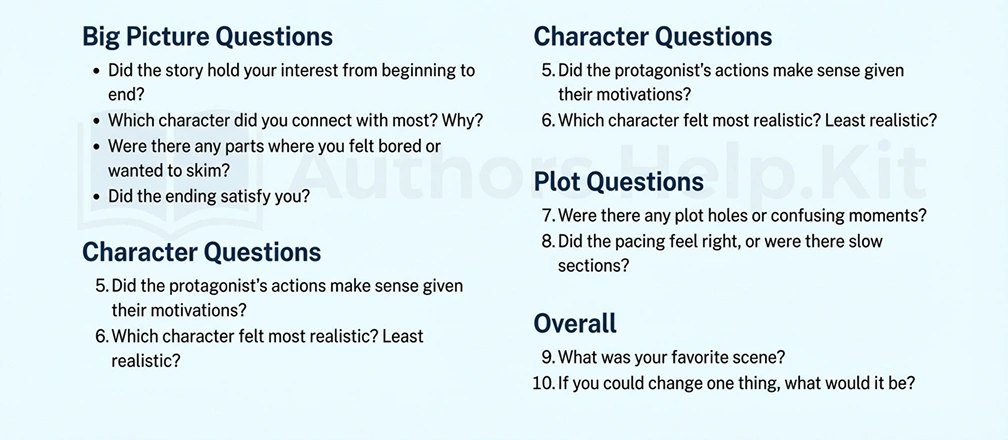
- Create a Questionnaire: Never just ask “Did you like it?” This will get you vague, unhelpful responses. Create a detailed questionnaire to guide their feedback. This forces them to think critically about specific aspects of your story. You can use a tool like Google Forms to create a free, easy-to-use questionnaire. Our Free Beta Reader Questionnaire Template includes over 20 essential questions to ask.
- Organize the Feedback: As feedback rolls in, you need a system to organize it. You can use a spreadsheet in Google Sheets or Airtable to track each reader’s comments chapter by chapter. This will help you spot patterns. If one reader says the pacing in chapter five is slow, it’s an opinion. If five readers say the same thing, you have a problem you need to fix. Our tutorial on How to Organize and Track Beta Reader Feedback shows you how to set up a simple system.
beta reader questionnaire template questions to ask
Handling Feedback: How to Listen and When to Ignore
Receiving feedback on your book baby is tough. It’s personal. You will get feedback you disagree with, and you will get feedback that hurts. The key is to develop a thick skin and learn to separate your ego from your work.
- The 24-Hour Rule: When you receive a piece of criticism that stings, do not respond for at least 24 hours. This gives you time to process the feedback emotionally and return to it with a more objective mindset.
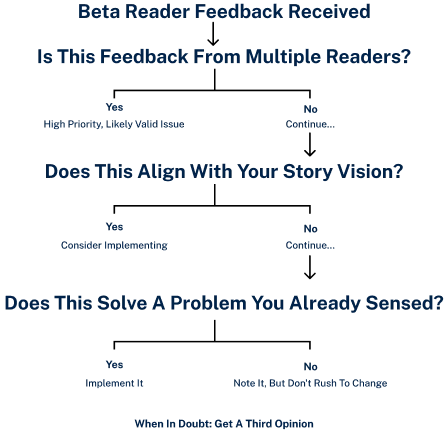
- Look for Patterns, Not Outliers: As mentioned above, the power of beta reader feedback is in the patterns. Don’t feel obligated to act on every single comment. If one person doesn’t like your main character but nine people love them, you can probably disregard that one comment. However, if multiple readers are confused by the same plot point, you must address it.
- Understand the “Why”: Sometimes beta readers are great at identifying a problem but terrible at suggesting a solution. They might say “the ending felt rushed,” but their idea for a new ending might be all wrong for your story. Your job is to listen to the diagnosis (the problem), not necessarily the prescription (the solution). Figure out why the ending felt rushed and come up with a solution that is true to your vision.
- Say Thank You: Always, always, always thank your beta readers for their time and effort. They have given you a tremendous gift. Even if you disagree with their feedback, acknowledge their contribution graciously. A simple thank you goes a long way in building good relationships in the writing community.
Working with beta readers is a skill, and you’ll get better at it with every book you write. By approaching it with a professional system and an open mind, you can transform your manuscript from good to great long before it ever reaches a professional editor. For more, explore our hub on Building Your Author Community.
how to process beta reader feedback decision tree
Pro tip:
Use the "Rule of Three" for beta feedback. If one reader mentions an issue, note it. If two readers mention it, pay attention. If three or more readers mention the same problem, it's real—fix it. This prevents you from chasing every single piece of conflicting advice and losing your mind.

Editing Mistakes (And How to Avoid Them): Your Guide to a Smoother Process

Even with the best intentions, authors make costly and time-consuming mistakes during the editing process. It’s an unfortunate rite of passage. From over-editing until the author’s voice is unrecognizable to rushing the process and publishing a book riddled with errors, these missteps can sabotage an otherwise great story.
But they don’t have to. By learning from the mistakes of those who have gone before you, you can navigate the editing journey more efficiently and with far less stress. This final section is a frank discussion of the most common editing mistakes and, more importantly, how to avoid them.
We’ll cover the dangers of editing out of order, the myth of “getting it perfect” in one pass, and the critical importance of getting fresh eyes on your work. Think of this as your map through a minefield. By knowing where the dangers are buried, you can chart a course that gets your book to the finish line faster and in better shape.
These insights will not only save you time and money but will also help you protect the heart of your story: your unique authorial voice.
While every author’s journey is unique, the mistakes they make tend to follow predictable patterns. Here are the most common and damaging errors to watch out for.
where to find book editors reedsy upwork fiverr comparison
Editing While You Write
This is the most common productivity killer for new authors. You write a paragraph, then immediately go back and polish it. You write a chapter, then spend the next day rewriting it. This is not writing; it’s procrastinating. Constantly switching between your creative “writer brain” and your critical “editor brain” is a recipe for burnout and will ensure you never finish your first draft.
How to Avoid It: Give yourself permission to write a terrible first draft. The goal of a first draft is not to be good; it’s to be done. Turn off your internal editor and just get the story down. You can’t edit a blank page. Our guide on How to Finish Your First Draft Without Giving Up provides practical tips for silencing your inner critic.
Editing Out of Order
As we’ve discussed, editing happens in layers. The second most common mistake is trying to fix everything at once. Authors will meticulously polish the prose of a chapter only to realize later that the entire chapter needs to be cut for structural reasons. This is incredibly demoralizing and a massive waste of time.
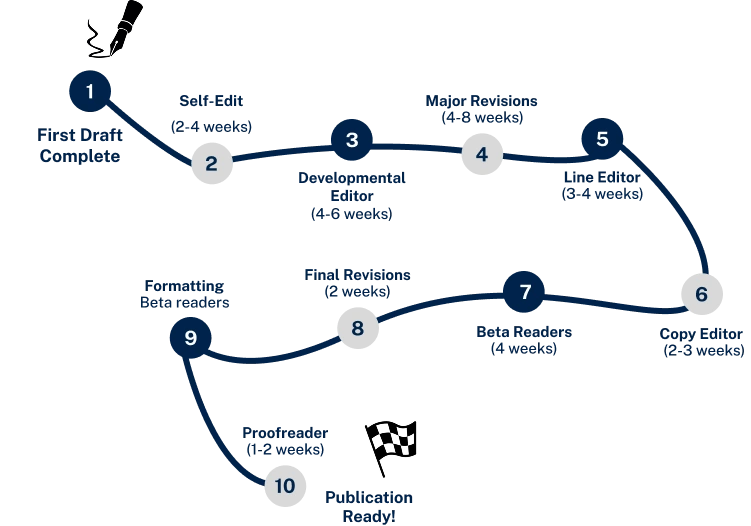
How to Avoid It: Follow the roadmap. Always edit from the big picture down to the small details. Start with Developmental Editing (story structure), then move to Line Editing (prose and style), then Copy Editing (grammar and mechanics), and finally Proofreading (final check). Never spend time polishing a sentence until you are 100% sure that sentence belongs in the book. Our article “Why Story-Level Edits Must Come First” explains this in more detail.
Over-Editing and Losing Your Voice
In the quest for perfection, it’s easy to go too far. Over-editing happens when you polish your prose so much that you strip it of all personality. Your unique voice gets sanded down and replaced with something technically correct but sterile and lifeless. This can happen during self-editing or by blindly accepting every suggestion from an editor or beta reader.
How to Avoid It: Trust your gut. If a suggested change feels wrong for your character or your story, it probably is. Your voice is your most valuable asset as a writer. Protect it. It’s important to listen to feedback, but you are the ultimate authority on your book. Learn When to Stop Editing and Publish and how to Protect Your Unique Authorial Style.
Pro tip:
Never pay 100% upfront. Industry standard is 50% deposit to secure your spot, 50% upon delivery. If an editor demands full payment before starting work, that's a major red flag. Legitimate professionals understand that payment terms protect both parties.
Not Getting Fresh Eyes on Your Work
No matter how good you are at self-editing, you cannot see your own blind spots. You are too close to the work. Skipping the beta reader or professional editing stage is a fatal error for any author who is serious about publishing a professional-quality book.
How to Avoid It: Budget for it, both in time and money. Make a plan to work with Beta Readers from the very beginning. If you can afford it, hire a Professional Editor. Even a single-pass copy-edit can make a world of difference. If your budget is zero, find a Critique Partner. The value of an outside perspective cannot be overstated. Our article “Why You Can’t Catch All Your Own Mistakes: The Value of Outside Perspective” drives this point home.
Rushing the Process
After spending months or years writing your book, it’s tempting to rush through the editing so you can finally hit “publish.” This is a huge mistake. Rushing leads to sloppy work, missed errors, and a book that doesn’t live up to its potential. Your book is a permanent reflection of your work; you owe it to yourself and your readers to make it the best it can be.
How to Avoid It: Create a realistic timeline and stick to it. As we outlined in the roadmap, a proper editing process takes months, not weeks. Build this time into your production schedule from the start. Learn How to Plan Realistic Editing Timelines and avoid the temptation to take shortcuts. Remember, no one is tapping their foot waiting for your book. It’s better to publish a great book late than a mediocre book on time.
Pro tip:
Always request a paid sample edit (1,000-1,500 words) before committing to a full manuscript edit. This costs $50-100 but can save you thousands if you discover the editor's style doesn't match your needs. Look for editors who offer this as standard practice—it shows confidence in their work.
By being aware of these common pitfalls, you can approach the editing process with a clear strategy. Editing is a marathon, not a sprint. It requires patience, discipline, and a willingness to learn. Embrace the journey, and you will not only produce a better book but also become a better writer in the process. Now that you have a complete map of the editing world, it’s time to start your journey. Head back to our Main Author Hub to explore the next stage in your publishing adventure: Publishing Your Book. Or Market Your Book**.
This hub is like having an entire editing team by your side, explaining every step without the jargon.
Authors Help Kit completely transformed how I approached the editing process. Before discovering this hub, I felt overwhelmed by all the advice online — everyone talked about developmental vs. line editing, but I didn’t actually understand what I needed or when. This hub broke everything down in a clear, structured way that finally made sense.
I started with the Complete Editing Roadmap and followed each step, from self-editing to working with beta readers and comparing professional editing services. The guides were detailed yet approachable, and the examples helped me see exactly what to look for in my own manuscript. The comparison charts alone saved me hundreds of dollars by helping me choose the right type of editor for my book.
By the end, I felt confident, organised, and proud of my polished draft — something I honestly never thought I’d say. This hub is like having an entire editing team by your side, explaining every step without the jargon. For any author who’s serious about producing a professional-quality book, this is hands down the most useful editing resource online.
Mathew E.,
Author