Start Writing Your Book With Confidence, Clarity, and a Plan That Actually Works
Everything you need to go from blank page to finished manuscript, step-by-step guides, proven frameworks, and practical tools from authors who’ve been there.
- Battle-tested by authors
- 100% Free resources
- No fluff, just systems
Writing a book is one of the most rewarding challenges you’ll ever take on,
But most aspiring authors start without a roadmap, and that’s why so many manuscripts end up abandoned in drawers.
Below you’ll find everything you need to go from blank page to finished draft: how to validate your book idea before investing months of work, create writing schedules that actually fit your life, beat writer’s block permanently, discover whether you’re a plotter or pantser, compare writing tools to find what works for you, stay motivated through the difficult middle, and create characters readers will remember.
Whether you’re writing your first book or your tenth, start wherever you are.
Start Writing Topics
Click below below to jump straight to the topic.

Your Complete Writing Roadmap: From Book Idea to Finished Manuscript

Every great book begins with a single spark of an idea. But how do you turn that fleeting thought into a finished manuscript of 80,000 words? The journey from “I have an idea” to “I wrote a book” can feel like a vast, uncharted wilderness.
This is where most aspiring authors get lost. They start with a burst of inspiration, write 10,000 words, and then grind to a halt, overwhelmed by the sheer scale of the project.
The secret isn’t a magical muse; it’s a roadmap. Starting a book without a roadmap is like driving cross-country without GPS—you might eventually get there, but you’ll waste time, take wrong turns, and probably give up halfway.

This section gives you the essential foundation every successful author builds on. It provides a clear, step-by-step roadmap that takes you from the very beginning of your journey to a completed first draft.
We’ll show you How to Test If Your Book Idea Is Worth Writing, how to create a Writing Schedule That Actually Works (even if you have no time), and how to set Realistic Writing Goals that keep you moving forward.
We’ll also cover the critical early decisions of Choosing Your Book’s Genre and Category and understanding What Your Genre’s Readers Expect.
Whether you’re starting at a blank page or already 10,000 words in, these guides will help you move forward with clarity and confidence.
Start with whichever topic matches where you are right now.
Step 1
Validate Your Book Idea
Before you invest hundreds of hours into writing a book, you need to know if the idea is worth pursuing.
A great idea in your head doesn’t always translate to a great book on the page. Validation is about testing your concept to see if it has legs.
- The 5-Minute Exercise to Validate Your Concept: Can you summarize your book idea in a single, compelling sentence? This is your “elevator pitch.” If you can’t, your idea might not be clear enough yet. Our guide “How to Write a Killer Logline” shows you how.
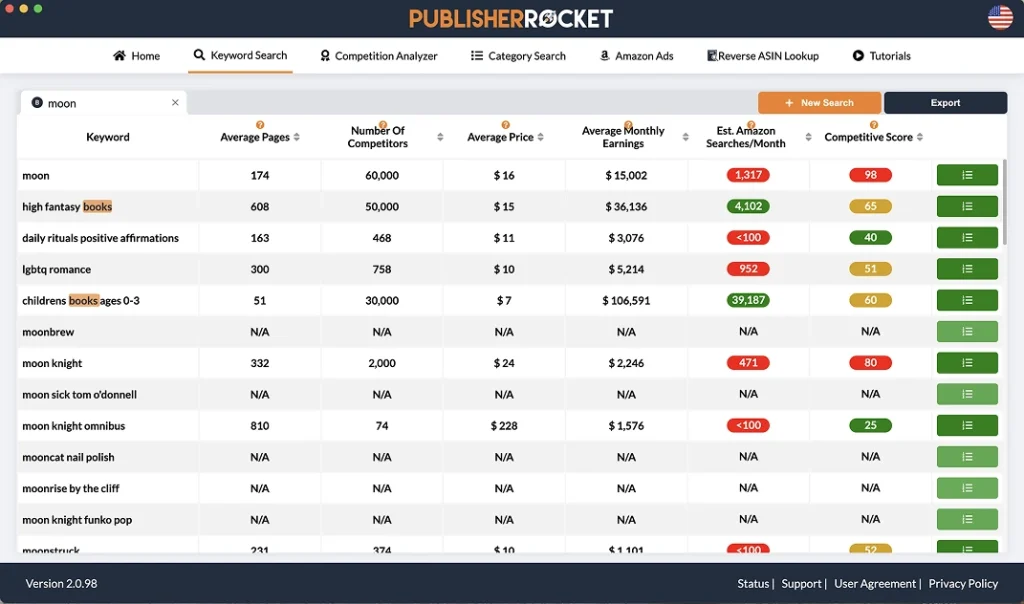
- Is There a Market for Your Book? For non-fiction, this means checking if people are actively searching for solutions to the problem you solve. For fiction, it means looking at comparable authors and books on Amazon. Use a tool like Publisher Rocket to research keywords and categories to see what readers are buying. Our guide “How to Know if Your Book Idea Will Sell” walks you through the market research process.
Pro tip:
Before spending months writing, test your book idea with your target audience. Post your concept in relevant Facebook groups, Reddit communities, or author forums.
If people respond with "I'd buy that!" or ask when it's coming out, you've validated demand. Save these comments—they make great testimonials later.
Step 2
Create a Sustainable Writing Schedule
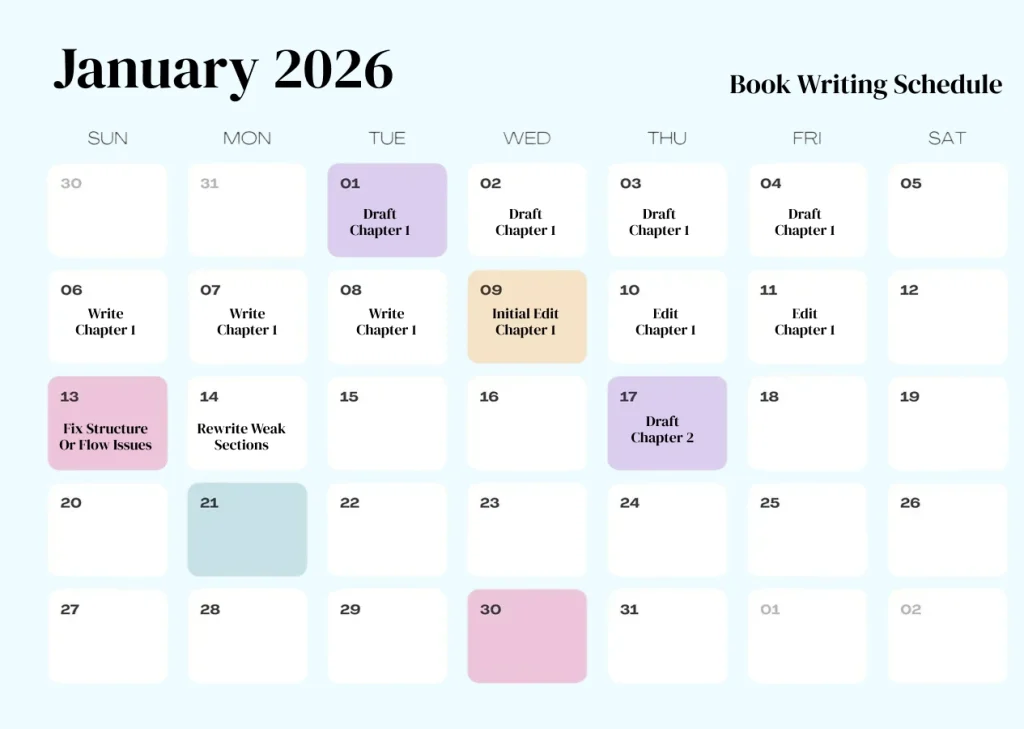
The biggest myth in writing is that you need huge, uninterrupted blocks of time to make progress. The truth is that bestselling authors write books in the small, stolen moments of their busy lives.
Consistency is far more important than the length of your writing sessions.
- Find Your “Magic Time”: Are you a morning person or a night owl? When is your energy highest? Schedule your writing sessions during this time, even if it’s just for 30 minutes. Our guide “How to Write When You Have No Time” is packed with strategies for busy people.
- Time-Based vs. Word-Count Goals: Some authors thrive on a goal of “write 500 words a day.” Others prefer a goal of “write for 30 minutes a day.” Experiment with both to see which one works for you. The key is to make your goal so small and achievable that you can’t say no. Our guide “Word Count vs. Time-Based Goals: Which is Better?” helps you decide.
Pro tip:
Use the "2-Day Rule" to maintain momentum: never let more than 2 days pass without writing. Even if you only write 50 words, keeping the habit alive is more important than word count. Missing 2+ days makes it exponentially harder to restart. Track your streak with a simple calendar or the WriteTrack app.
Step 3
Outline Your Book (Even if You’re a “Pantser”)
Every book needs a structure. Whether you’re a meticulous “plotter” who outlines every scene or a “pantser” who writes by the seat of their pants, you still need a basic understanding of where your story is going. An outline is your roadmap.
- The 3-Act Structure for Fiction: This classic storytelling framework (Beginning, Middle, End) is the foundation of most successful novels and screenplays. Understanding the key plot points of the 3-act structure will give your story a satisfying shape. Our guide “The 3-Act Structure Explained” breaks it down.
- Non-Fiction Book Outline Templates: For non-fiction, your outline is your table of contents. It’s a logical progression of ideas that takes your reader from problem to solution. Our guide “How to Outline a Non-Fiction Book” provides several templates.
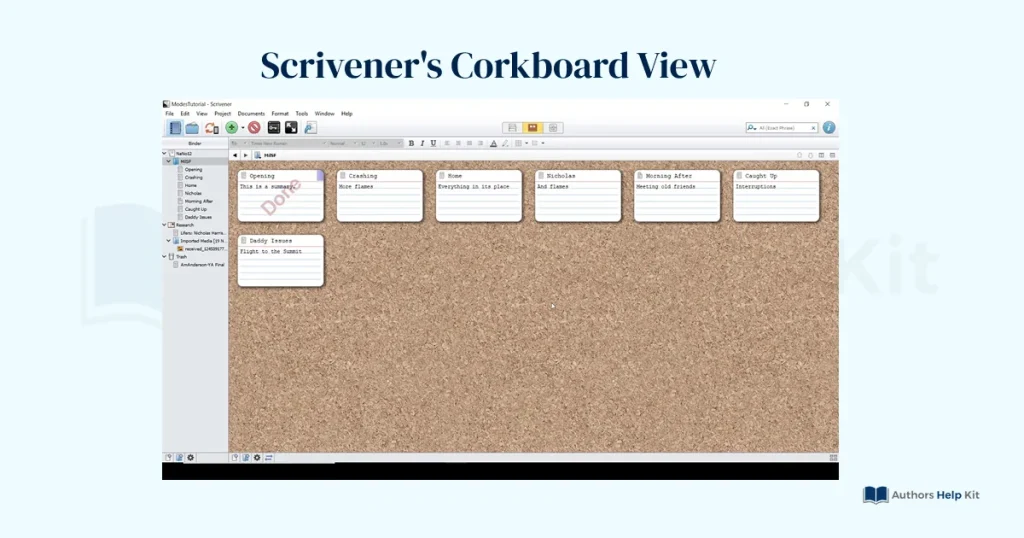
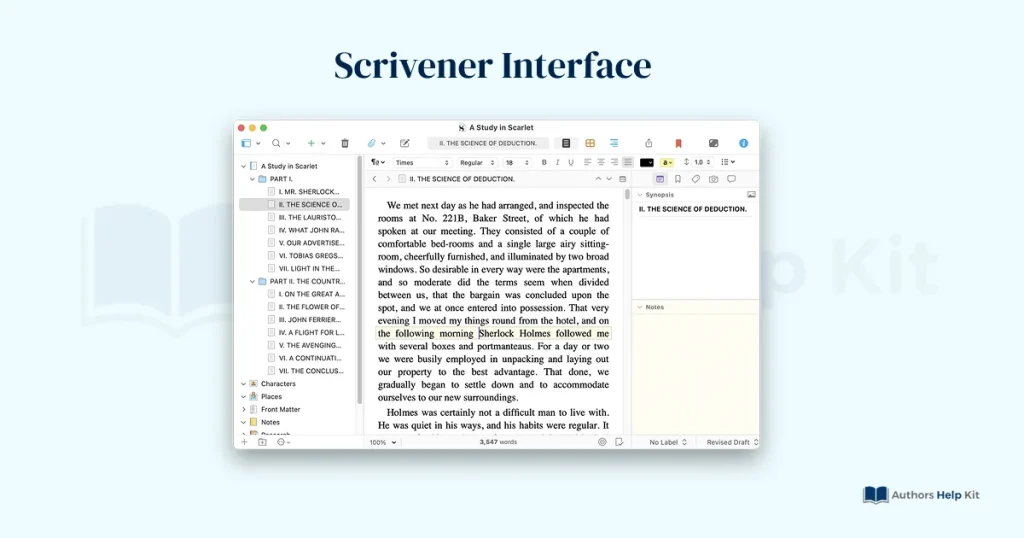
- Tools for Outlining: You can use a simple word processor, but dedicated tools can make the process much easier. Scrivener is famous for its virtual corkboard and outliner. Notion and Airtable are also powerful tools for organizing complex plots and research. Our guide “Best Outlining Software for Authors” compares the top options.
Step 4
Choose Your Writing Tools
The right tools won’t write the book for you, but they can make the process smoother and less frustrating.
The best writing tool is the one you’ll actually use.
- Dedicated Writing Software: While you can write a book in Microsoft Word or Google Docs, dedicated writing software like Scrivener or Atticus is designed specifically for long-form writing. They allow you to break your book into chapters and scenes, easily reorganize them, and keep your research all in one place. Our guide “Why Scrivener Is Worth It (Or Not)” provides an honest review.
- Distraction-Free Writing Apps: If you’re easily distracted by the internet, a distraction-free writing app like FocusWriter or OmmWriter can be a lifesaver. They create a clean, minimalist writing environment that helps you focus on the words.

Beat Writer's Block Forever: Practical Strategies to Get Unstuck

Writer’s block isn’t a mysterious curse that strikes randomly from the heavens; it’s a solvable problem with identifiable causes and proven solutions.
Every writer, from the first-time novelist to the multi-million-copy bestseller, faces moments when the words won’t flow. The difference between authors who finish their books and those who don’t often comes down to how they handle this inevitable resistance.
It’s rarely a true “lack of inspiration.” More often, it’s a symptom of something else: fear, perfectionism, or a lack of clarity about what comes next in your story.
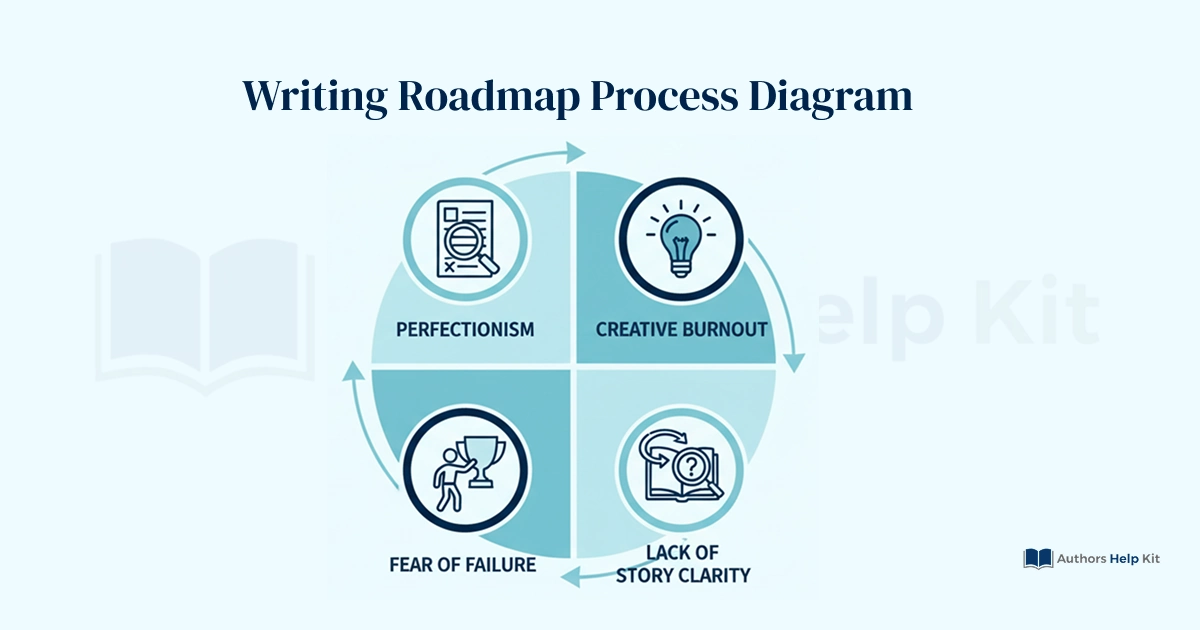
This section tackles writer’s block from every angle. We’ll help you understand What Really Causes Writer’s Block (hint: it’s not what you think), provide Proven Techniques to Overcome It, and show you how to create a Writing Environment That Flows.
We’ll also cover the psychological battles that every writer faces, from Managing Perfectionism and Silencing Your Inner Critic to Dealing with Imposter Syndrome.
These aren’t feel-good platitudes; they’re battle-tested strategies from authors who’ve written through the resistance and come out the other side.
Understanding the Real Cause of Your Writer’s Block
Writer’s block is often a symptom of a deeper issue. Identifying the root cause is the first step to overcoming it.
- Fear vs. Resistance: Fear of failure, fear of not being good enough, fear of what people will think—these are the real demons. Author Steven Pressfield calls this “The Resistance” in his book “The War of Art.” It’s the universal force that opposes all creative work. Our guide “Fear vs. Resistance: What’s Stopping You?” helps you identify your specific fear.
- The Pressure of the Blank Page: Staring at a blank page can be paralyzing. The expectation to produce something brilliant from nothing is immense. The solution is to never start with a blank page. Always end your writing session by writing the first sentence of the next scene. This gives you a running start for your next session.
Pro tip:
Keep a "Block Journal" for one week. Every time you feel stuck, write down: (1) What you were about to write, (2) What you're feeling, (3) What you're afraid of. Patterns will emerge.
Most writers discover their block has the same root cause 80% of the time—and once you know it, you can address it directly.
Proven Techniques to Get Unstuck
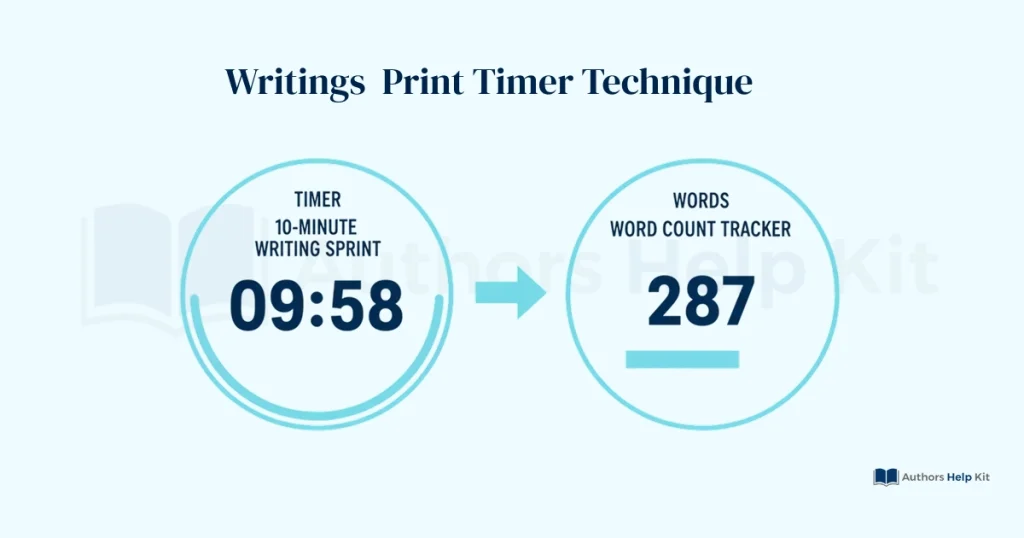
When you’re stuck, you need a practical toolkit of techniques to get the words flowing again.
- The “Write Badly” Method: Give yourself permission to write a terrible first draft. The goal of a first draft isn’t to be good; it’s to exist. You can’t edit a blank page. Our guide “The Power of a ‘Vomit Draft’” explains why this is the most liberating technique for any writer.
- 10-Minute Sprints: Set a timer for just 10 minutes and write without stopping. Don’t think, don’t edit, just write. The goal is to build momentum. Often, at the end of 10 minutes, you’ll be in the flow and want to keep going. Our guide “How to Use Writing Sprints to Build Momentum” provides a framework.
- Switching Projects or Mediums: If you’re truly stuck on your novel, work on something else for a day. Write a short story, a blog post, or a journal entry. Sometimes, changing the context is all you need to refresh your creative well.
Pro tip:
Create a "Bad Writing" folder where you give yourself permission to write absolute garbage. Set a timer for 15 minutes and write the worst version of your scene possible—clichés, purple prose, everything wrong.
This removes pressure and often produces surprisingly usable material. Many bestselling authors use this technique, including Jodi Picoult.
Creating a Writing Environment That Flows
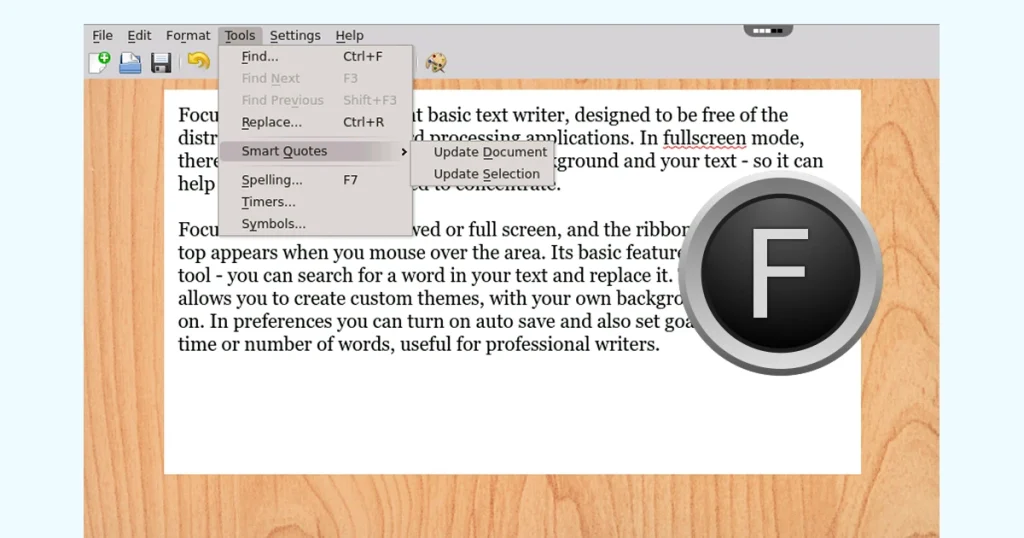
Your physical environment has a huge impact on your ability to focus and create. You need to design a space that signals to your brain that it’s time to write.
- Music, Silence, or Background Noise? Some writers need absolute silence. Others thrive on the ambient noise of a coffee shop or a curated playlist. Experiment to find what works for you. Apps like MyNoise can create customized soundscapes.
- Eliminate Distractions: Turn off your phone. Disconnect from the internet. Use a distraction-free writing app like FocusWriter. The modern world is designed to steal your attention; you have to actively fight to protect it.
Managing the Psychological Game of Writing
Writing is as much a mental game as it is a creative one. You have to learn to be your own coach.
- How to Silence Your Inner Critic: Your inner critic is that voice in your head that tells you everything you write is terrible. Acknowledge the voice, thank it for its opinion, and then politely tell it to shut up. The time for criticism is during the editing phase, not the drafting phase. Our guide “First Draft vs. Final Draft Mindset” explains how to separate the creator from the critic.
- Dealing with Imposter Syndrome: Every author, no matter how successful, feels like a fraud sometimes. It’s a normal part of the creative process. The only cure for imposter syndrome is to keep writing. Our guide “Every Author Feels Like a Fraud (Here’s Why That’s Normal)” will make you feel less alone.
- Knowing When to Push Through vs. When to Take a Break: Sometimes, the best thing you can do is step away from the keyboard. Go for a walk, read a book, or watch a movie. Your subconscious will often solve the problem for you while you’re not looking. Our guide “Signs You Need a Writing Break” helps you recognize the difference between productive struggle and burnout.

Plotting vs. Pantsing: Find Your Style and What Actually Works

One of the biggest debates in the writing world is the eternal battle between “plotters” and “pantsers.” Plotters are the architects, they meticulously outline every scene, character arc, and plot twist before they write a single word of their manuscript.
Pantsers (as in, writing by the seat of your pants) are the explorers, they start with a character or a situation and discover the story as they go, letting the narrative unfold organically. One of the biggest mistakes new authors make is forcing themselves into a writing process that doesn’t fit their natural creative style. There is no “right” way, only what works for you.
This section helps you discover your natural writing style and gives you the tools to make it work for you. We’ll explore the fundamental differences between Plotters vs. Pantsers, help you figure out Which Style Fits Your Personality, and provide a toolkit for both approaches.
For plotters, we’ll cover Story Structure Frameworks and How to Create Scene-by-Scene Outlines. For pantsers, we’ll provide a Survival Guide with techniques for Discovery Writing without getting lost.
We’ll also explore the Hybrid Approach, showing you how to combine the best of both worlds for a process that gives you both structure and creative freedom.
Understanding Plotters vs. Pantsers

- The Plotter’s Mindset: Plotters value structure, efficiency, and knowing where they are going. They want to solve story problems before they start writing, which often leads to a faster, cleaner first draft. Famous plotters include J.K. Rowling, who had the entire Harry Potter series outlined from the beginning, and John Grisham.
- The Pantser’s Mindset: Pantsers value discovery, spontaneity, and the magic of the unknown. They find that a detailed outline kills the creativity and makes writing feel like a chore. Famous pantsers include Stephen King, who famously said, “Outlines are the last resource of bad fiction writers,” and George R.R. Martin.
Our guide “Famous Authors and Their Writing Methods” explores the processes of many well-known writers.
Pro tip:
Not sure if you're a plotter or pantser? Try this test: Outline your next 5 scenes in detail. If you feel excited and energized, you're probably a plotter. If you feel bored and constrained, you're likely a pantser. Your emotional response to outlining is the best indicator of your natural style.
The Plotter’s Toolkit
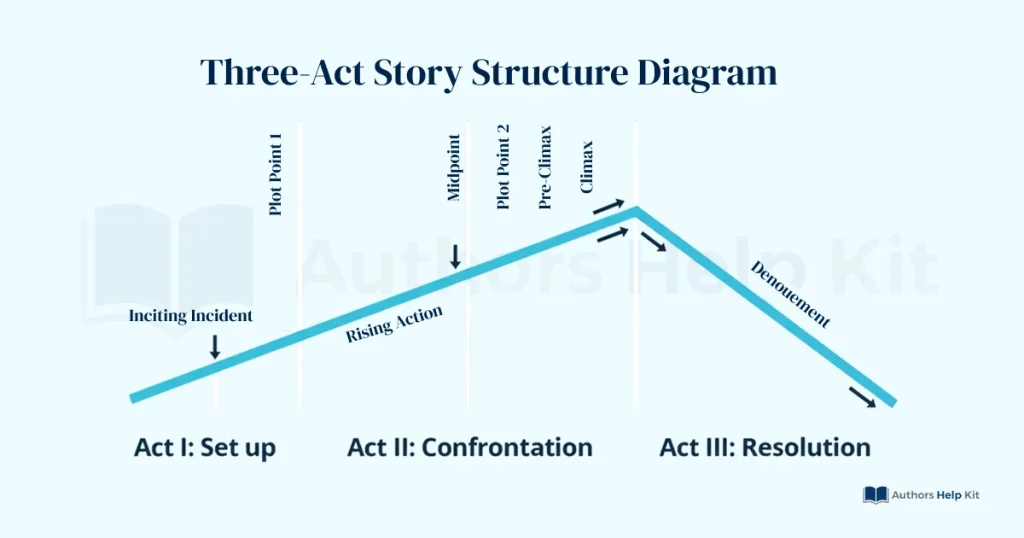
If you’re a plotter, you need a solid framework to build your story.
- Story Structure Frameworks That Work: There are dozens of story structure templates you can use, from the simple 3-Act Structure to more detailed models like “Save the Cat! Writes a Novel” or “The Hero’s Journey.” These are not rigid formulas but proven frameworks for telling a satisfying story. Our guide “Story Structure Frameworks Compared” breaks down the most popular options.
- How to Create Scene-by-Scene Outlines: A detailed outline can be your best friend. You can use a spreadsheet, a Word document, or a dedicated tool like Scrivener to create a scene list with a brief description of what happens in each scene, which characters are present, and what the goal of the scene is.
- Best Outlining Software Compared: Tools like Scrivener, Plottr, and Notion are designed for plotters. They allow you to create detailed outlines, track character arcs, and visualize your story in a way that a simple word processor can’t. Our guide “The Best Tools for Plotters” reviews the top options.
The Pantser’s Survival Guide
If you’re a pantser, you need techniques to guide your discovery writing without getting lost in the woods.
- How to Pants Without Losing Your Way: Even pantsers need a general sense of direction. You might not have a detailed map, but you should at least have a compass. This could be a clear understanding of your main character’s ultimate goal or the story’s central conflict. Our guide “Discovery Writing Techniques” provides several methods.
- Writing Into the Dark: This technique involves writing one scene at a time, focusing only on what the character knows and wants in that moment. At the end of the scene, you ask yourself, “What happens next?” This can lead to surprising and organic plot twists.
- Tools for Pantsers: While plotters have their outlining software, pantsers need tools that support discovery. Scrivener is also great for pantsers, as it allows you to write in non-linear chunks and easily reorganize them later. A simple journal for brainstorming and asking “what if?” questions can also be a pantser’s best friend.
The Hybrid Approach: The Best of Both Worlds
Most experienced authors are not pure plotters or pure pantsers; they are “plantsers.” They combine the strengths of both approaches for a flexible and effective process.
- Combining Structure with Creative Freedom: A common hybrid approach is to create a basic outline of the major plot points (the beginning, the inciting incident, the midpoint, the climax, the end) but leave the scenes in between open for discovery. This gives you a roadmap but allows for spontaneous detours.
- When to Outline and When to Explore: You might outline the first act of your novel in detail to get started, then “pants” your way through the second act, and then outline the climax and resolution once you have a better feel for the story. Our guide “The Plantser’s Manifesto” shows you how to create a custom process that works for you.
Ultimately, there is no right or wrong way to write a book. The goal is to find a process that keeps you excited, engaged, and productive. Experiment with different techniques, steal what works, and build a writing style that is uniquely yours.
Pro tip:
Use the "Headlights Method" for a perfect plotter-pantser balance: only outline as far ahead as you can "see" (like driving at night). Start with a rough outline of major plot points, then outline each act in detail only when you're ready to write it. This gives you structure without killing spontaneity. James Patterson uses a version of this method.

Writing Tools Compared Side-by-Side: What Do You Actually Need?

The right writing tools don’t make you a better writer, but they can make the writing process smoother, faster, and less frustrating. The wrong tools? They’ll slow you down, complicate simple tasks, and add unnecessary friction to an already challenging process.
The market is flooded with software and apps all claiming to be the “best” solution for writers, from simple word processors to complex, all-in-one studio programs. This section cuts through the noise with honest, practical comparisons of the writing tools that actually matter.
We’ll help you figure out what you truly need (spoiler: probably less than you think), what’s worth paying for, and what’s just marketing hype. We’ll compare standard Word Processors like Microsoft Word and Google Docs, dive deep into dedicated Writing Software like the legendary Scrivener and its modern competitors, explore the world of Distraction-Free Writing Apps, and compare the top Grammar and Style Checkers.
We’ll also look at Organization and Planning Tools and the growing field of Dictation Software. This is your guide to making informed decisions without wasting money on tools you don’t need.
Dedicated Writing Software: Scrivener vs. Atticus vs. Vellum
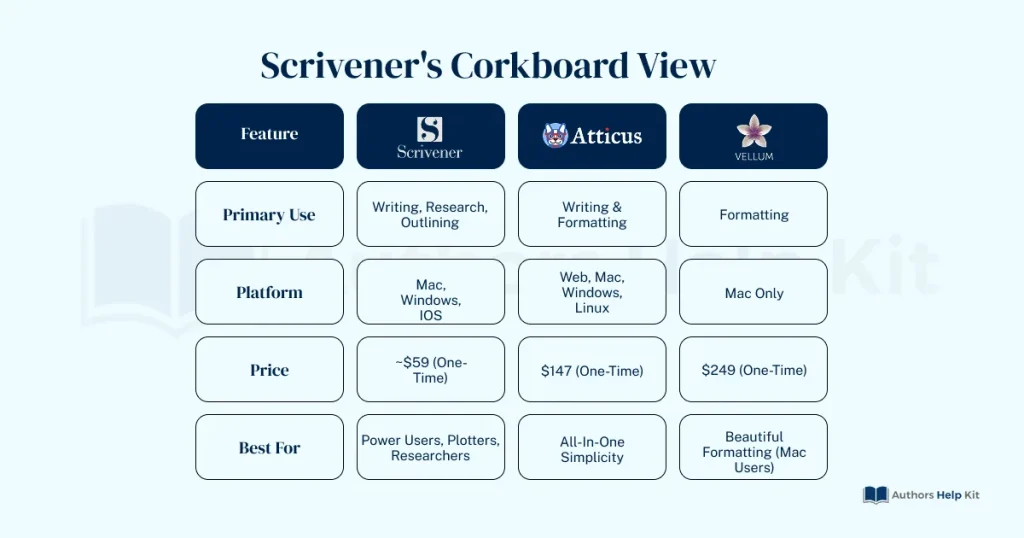
- Scrivener: The undisputed king of writing software for over a decade. It allows you to write in any order, keep all your research in one place, and has a powerful outlining corkboard. It has a steep learning curve but is incredibly powerful. Our “Scrivener 3 Tutorial” is a great place to start.
- Atticus: A modern, web-based competitor to both Scrivener and Vellum. It aims to be an all-in-one tool for writing and formatting. It’s simpler than Scrivener and works on all platforms.
- Vellum: The gold standard for beautiful ebook and print formatting. It’s not really a writing tool, but many authors write in Word or Scrivener and then import into Vellum for the final, professional look. It is Mac-only.
Pro tip:
Before buying Scrivener, download the free 30-day trial—but here's the trick: it's 30 days of use, not 30 calendar days. If you only open it twice a week, your trial lasts 15 weeks. This gives you plenty of time to learn the software through their excellent built-in tutorial without pressure.
Word Processors: Microsoft Word vs. Google Docs
Most writers start here. They are familiar and ubiquitous, but are they the best tool for writing a book?
- Microsoft Word: The industry standard for manuscript submission. It’s powerful and feature-rich, but it can become slow and unwieldy for a large manuscript. Reorganizing chapters is a nightmare of cutting and pasting.
- Google Docs: Free, cloud-based, and excellent for collaboration. However, it can also struggle with very large documents, and its offline capabilities are limited.
- The Verdict: Both are fine for writing, but they are not designed for it. They are best for the final formatting and editing stages. Our guide “Why You Shouldn’t Write Your Book in Word” explains the limitations.
Distraction-Free Writing Apps
These apps create a minimalist writing environment to help you focus.
- FocusWriter: Free, cross-platform, and highly customizable. It hides everything but the page you’re writing on.
- WriteMonkey: Another free, minimalist text editor with a retro feel.
- OmmWriter: A beautiful, paid app for Mac and PC that uses calming backgrounds and sounds to create a zen-like writing space.
Grammar and Style Checkers: Grammarly vs. ProWritingAid
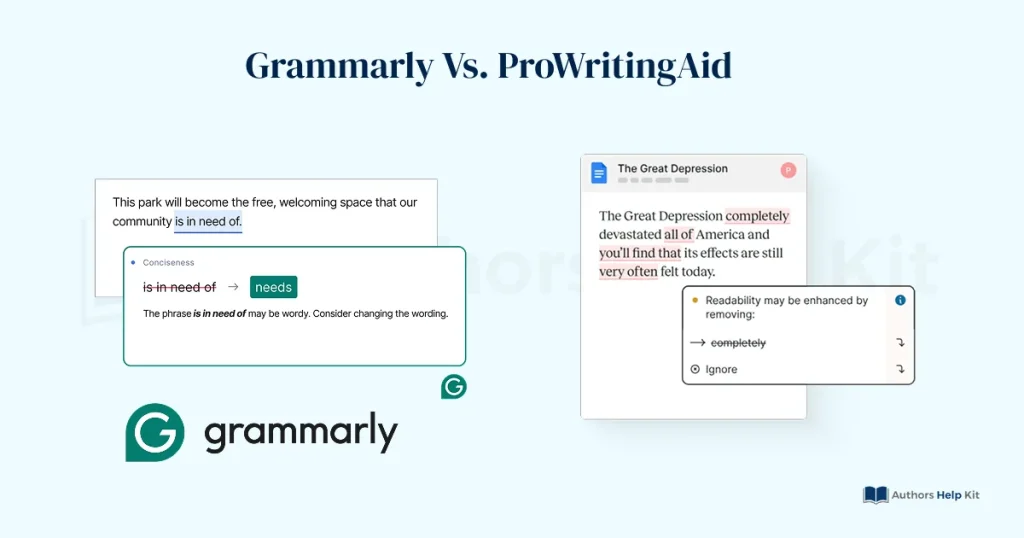
These tools go beyond the basic spell check in your word processor to help you improve your prose.
- Grammarly: The most popular grammar checker. It’s easy to use and has a great browser extension. It’s excellent for catching typos and grammatical errors.
- ProWritingAid: More powerful and comprehensive than Grammarly, designed specifically for fiction writers. It offers over 20 different reports on things like pacing, dialogue, sentence structure, and clichés. It’s a powerful self-editing tool.
The Verdict: For basic error checking, Grammarly is fine. For serious self-editing, ProWritingAid is the superior tool for fiction authors. Our guide “Grammarly vs. ProWritingAid for Authors” breaks down the differences.
Pro tip:
Don't run ProWritingAid or Grammarly while drafting—only during editing. Grammar checkers during first drafts kill momentum and trigger perfectionism. Write messy, edit clean. Save these tools for your second draft when you're ready to polish, not create.

Stay Motivated Through the Middle: How to Finish What You Start

Every author hits the wall. That moment, usually somewhere around the 30,000-word mark, when the initial excitement has faded, the ending still feels impossibly far away, and you start questioning everything about your book.
This is the “muddy middle,” and it’s where most manuscripts go to die. But it doesn’t have to be that way. Finishing your book isn’t about endless motivation, it’s about having systems that work even when motivation fails. It’s about psychological strategies and practical systems to push through when inspiration disappears.
This section gives you the tools to navigate the muddy middle and come out the other side with a finished manuscript. We’ll explore Why the Middle Is the Hardest Part, how to Set Milestones That Create Momentum, and the power of Accountability Systems That Work.
We’ll also cover the critical skill of Rekindling Your Love for Your Story when you feel like giving up, and how to manage the inevitable External Pressures and Life Events that threaten to derail your progress. This is your survival guide for the most challenging part of the writing journey.
Why the Middle Is the Hardest Part
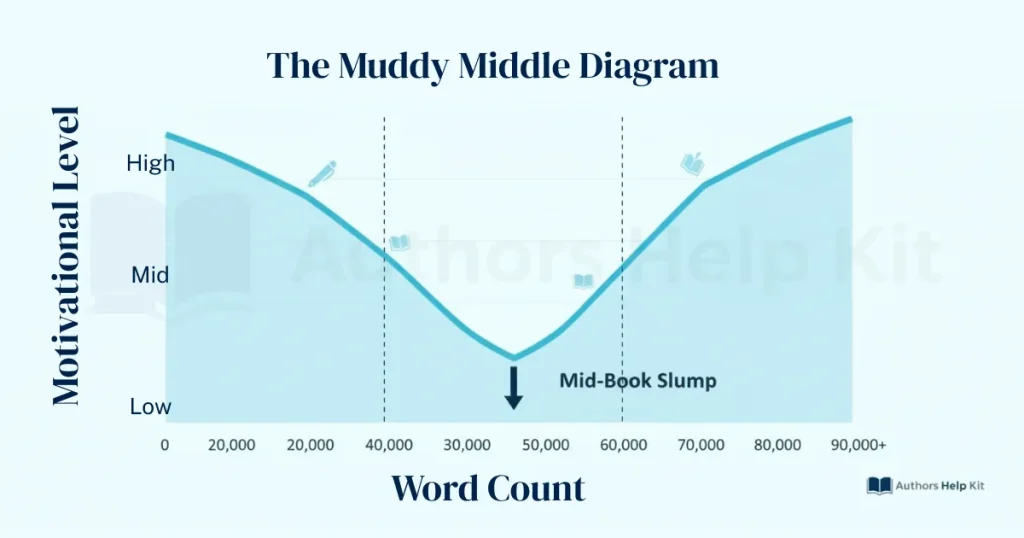
The middle of a novel is often the least structured and most complex part of the story. The shiny newness of the beginning is gone, and the clear target of the ending is not yet in sight.
This is where plots can get tangled, characters can lose their way, and self-doubt can creep in.
- The Psychology of the “Muddy Middle”: Your brain gets a dopamine hit from starting new things and from finishing them. The middle offers neither. It’s a long, slow grind that requires a different kind of energy. Our guide “How to Push Through When Excitement Fades” explores the psychology of long-term projects.
Pro tip:
When you hit the muddy middle, skip ahead and write a scene you're excited about—even if it's near the end. This reignites your passion for the story and gives you a "lighthouse" to write toward. Brandon Sanderson often writes his climax scenes first for this exact reason.
Setting Milestones That Create Momentum
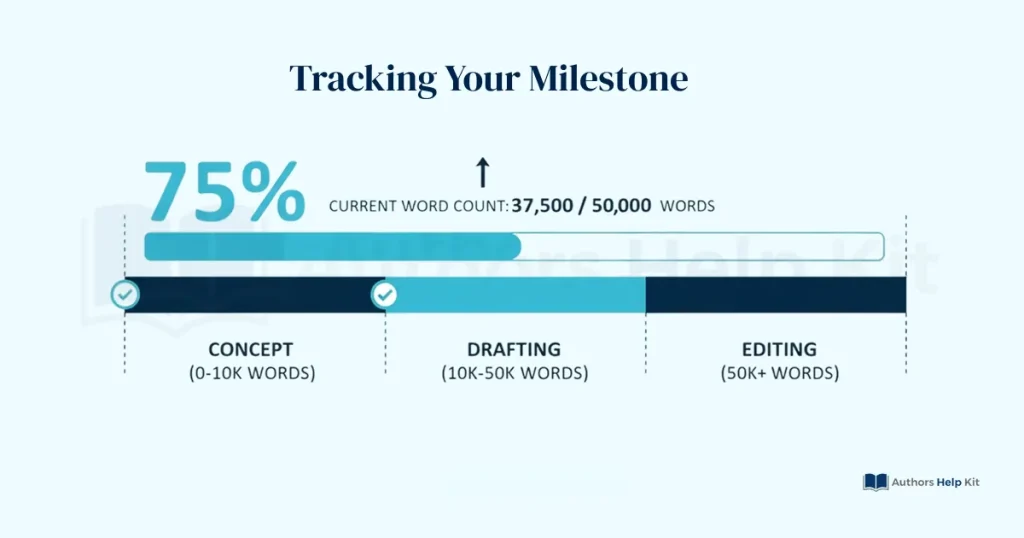
You can’t eat an elephant in one bite. You have to break it down into manageable chunks. The same is true for writing a book.
- Celebrating Small Wins Along the Way: Instead of focusing on the daunting goal of “finish the book,” focus on smaller, achievable milestones. “Finish Part 1.” “Write the midpoint scene.” “Reach 50,000 words.” Each time you hit a milestone, celebrate it. This creates a sense of progress and releases a little bit of that “finish line” dopamine.
- How to Break Your Book into Manageable Chunks: Think in terms of scenes and chapters, not just word count. A goal of “write three scenes this week” can feel much more achievable than “write 5,000 words.” Our guide “Chunking Your Novel” provides several methods.
Pro tip:
Create a "Motivation File" before you start writing: collect inspiring quotes, reader emails, reviews of similar books, and your own "why I'm writing this" statement. When motivation crashes at 40,000 words, open this file. It's your emergency motivation kit. Update it whenever you feel inspired.
Accountability Systems That Work

Motivation is fickle. Accountability is reliable. When you know someone is expecting you to show up, you’re far more likely to do the work.
- Finding Writing Partners and Critique Groups: A writing partner or a small critique group can be the single most effective accountability tool. You agree to exchange chapters by a certain deadline, and the social pressure keeps you on track. Our guide “How to Find a Critique Group That Doesn’t Suck” shows you where to look.
- Public Accountability: Does It Help or Hurt? Some authors thrive on public accountability, posting their daily word counts on social media. For others, this can create too much pressure and anxiety. Experiment to see if it works for you.
Rekindling Your Love for Your Story
When you’re deep in the muddy middle, it’s easy to forget why you started writing this book in the first place. You need to reconnect with your initial passion.
- What to Do When You Hate Your Book: It’s normal to fall out of love with your manuscript. When this happens, go back and re-read the scenes you’re most proud of. Remind yourself of what you love about your characters and your world. Our guide “How to Fall Back in Love with Your Story” has more tips.
- Managing Your “Why”: Reconnect with your core motivation for writing this book. What is the message you want to share? What is the story you need to tell? Write it down and put it somewhere you can see it every day.
Managing External Pressures and Life Events
Life happens. You’ll get sick, your day job will get stressful, and family obligations will pop up. A rigid writing schedule can shatter when it collides with real life. You need a system that is flexible and resilient.
- How to Keep Writing During Difficult Times: The key is to lower your expectations. Instead of trying to write 1,000 words a day, aim for 100. The goal is not to make massive progress but to simply keep the habit alive. Even a few words a day keeps the story fresh in your mind.
- Balancing Writing with Family and Work: Writing is a marathon, not a sprint. It’s okay to take planned breaks. Communicate with your family about your writing goals and schedule dedicated writing time. Our guide “The Part-Time Author’s Survival Guide” is for anyone juggling a day job and a writing career.

Create Characters Readers Remember: The Heart of Your Story

Your plot might hook readers, but your characters are what make them care. A clever plot can be entertaining, but it’s the characters that readers fall in love with, root for, and remember long after they’ve finished the book.
Flat, forgettable characters will sink even the most clever storyline, while compelling, dimensional characters can carry readers through weaker plots. This section teaches you how to create people (not just placeholders) that readers will think about long after closing your book.
We’ll cover the Fundamentals of Character Development, from building character Backstories that inform without overwhelming, to designing Character Arcs that show real transformation.
We’ll explore how to write Realistic Dialogue that sounds authentic and distinct, and how to develop Character Relationships that crackle with tension or warmth.
We’ll also show you how to avoid the tired Stereotypes and Clichés that make readers roll their eyes. Whether you’re writing fiction or narrative non-fiction, these guides help you populate your pages with characters worth remembering.
Character Development Fundamentals
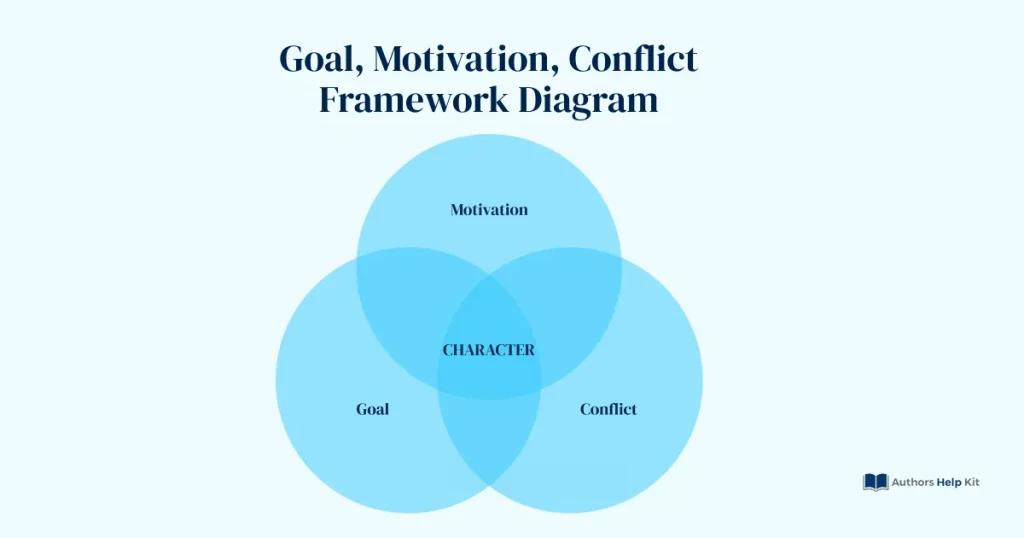
Great characters are a combination of their internal and external worlds.
- The 3 Essential Elements of Memorable Characters: Every great character has a Goal (what they want), a Motivation (why they want it), and a Conflict (what’s stopping them). This is the engine that drives your story. Our guide “Goal, Motivation, Conflict: The GMC Model” is a must-read.
- How to Avoid Flat, Boring Characters: A common mistake is to create characters who are either all good or all bad. Real people are flawed and contradictory. Give your hero a weakness. Give your villain a sympathetic trait. Our guide “The Flaw That Makes a Character Great” explores this concept.
Pro tip:
Give your protagonist a "ghost"—a wound from their past that shapes their present behavior and must be healed by the end of the story. This creates depth and a built-in character arc. K.M. Weiland's book "Creating Character Arcs" explores this concept in detail. The ghost is what makes characters feel real.
Creating Character Backstories
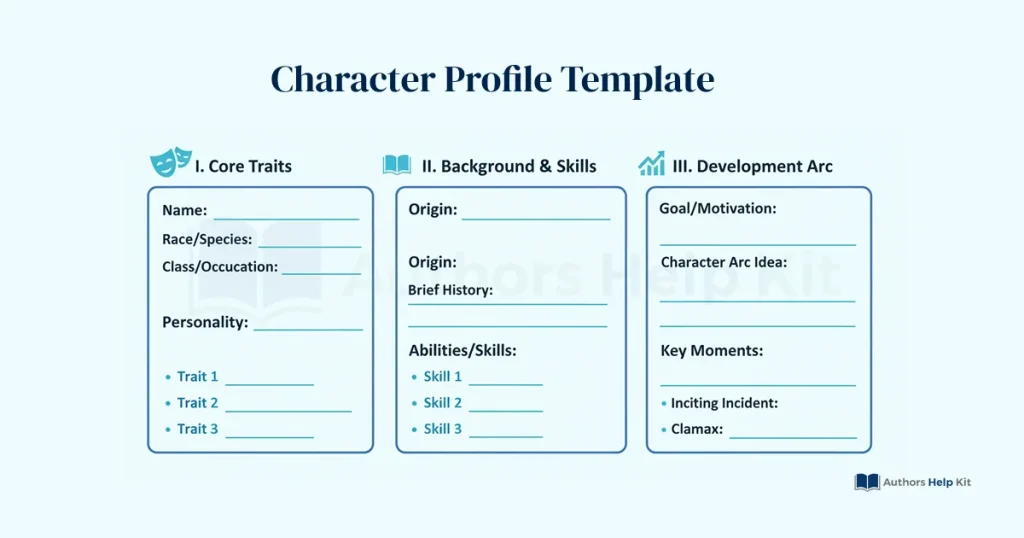
Your characters didn’t just appear on page one. They have a history that shapes their present actions.
- How Much Backstory Should You Include? The key is to sprinkle in backstory only when it’s relevant to the present story. Don’t info-dump a character’s entire life story in Chapter 2. Our guide “The Art of the Backstory Reveal” shows you how to weave it in naturally.
Character Biography Templates: Before you start writing, it can be helpful to fill out a detailed questionnaire for your main characters.
This helps you understand them on a deeper level, even if most of the information never makes it into the book. Our “Ultimate Character Profile Template” is a great resource.
Character Arcs and Transformation
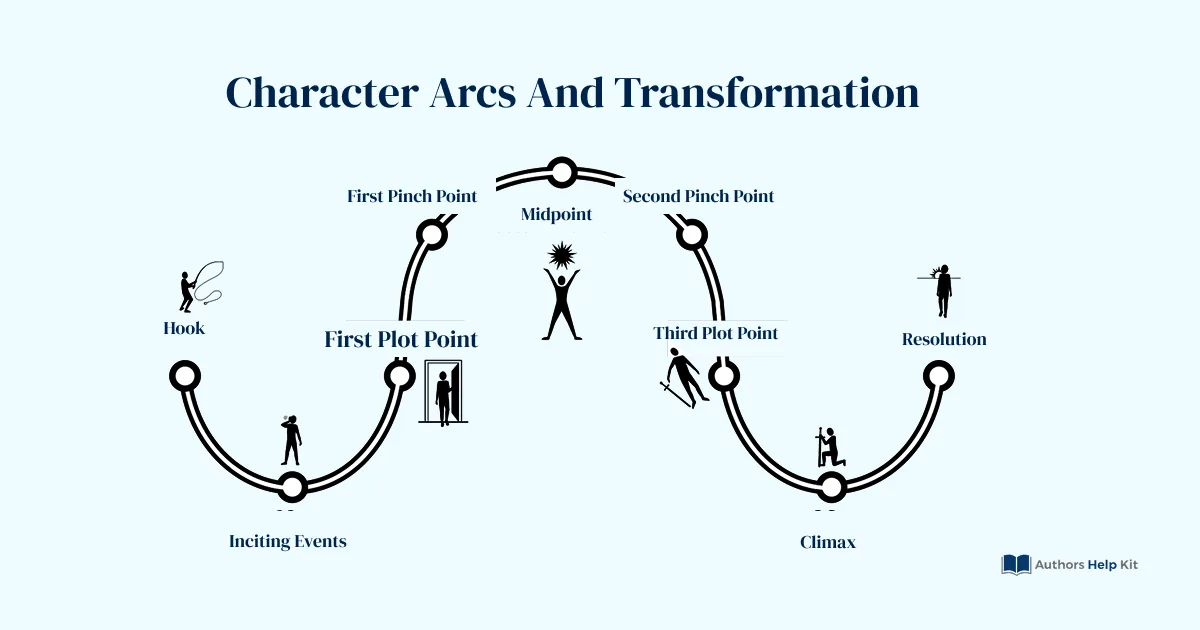
A story is about change. Your main character should not be the same person at the end of the book as they were at the beginning.
- The Hero’s Journey for Your Protagonist: This classic story structure is all about the transformation of the hero. Understanding the stages of the Hero’s Journey can provide a powerful framework for your character’s arc. Our guide “The Hero’s Journey Explained” breaks it down.
- How to Show Character Growth: Character growth is shown through action and decision-making. How does your character react to a similar situation differently at the end of the book than they did at the beginning? This demonstrates their transformation.
Writing Realistic Dialogue
Dialogue should do more than just convey information. It should reveal character, advance the plot, and create subtext.
- Making Each Character Sound Unique: Every character should have a distinct voice. A well-educated professor will speak differently than a high-school dropout. Pay attention to their vocabulary, rhythm, and speech patterns.
- Dialogue Tags vs. Action Beats: Instead of constantly using “he said” and “she said,” use action beats to break up your dialogue and reveal character. For example, instead of “I don’t believe you,” she said, try: She crossed her arms and narrowed her eyes. “I don’t believe you.” Our guide “The Art of the Action Beat” provides dozens of examples.
Pro tip:
Read your dialogue out loud or use a text-to-speech tool. If it sounds stiff or unnatural when spoken, it will read that way too. Real people use contractions, interrupt each other, and leave sentences unfinished. Your characters should too. Record real conversations (with permission) to study natural speech patterns.
Character Relationships and Dynamics
The interactions between your characters are often more interesting than the plot itself.
- Creating Tension Between Characters: Conflict is the heart of drama. This doesn’t always mean arguments. It can be unspoken tension, conflicting goals, or secrets.
- Building Believable Relationships: Whether it’s a romance, a friendship, or a rivalry, the relationship should evolve over the course of the story. It should have its own arc.
Avoiding Character Stereotypes and Clichés
Readers are savvy. They’ve seen the “gruff detective with a heart of gold” and the “manic pixie dream girl” a thousand times. Your job is to make your characters feel fresh and real.
- How to Subvert Reader Expectations: Take a common character trope and give it a twist. What if the damsel in distress is actually the villain? What if the wise old mentor gives terrible advice? Our guide “Common Character Tropes and How to Flip Them” provides a list of clichés to avoid.
By focusing on these fundamentals, you can create characters that feel like real people—characters that will stay with your readers long after they’ve turned the final page.
The free resources, especially the publishing checklist and platform comparison guide, were clear, useful, and something I could actually use right away.
As someone who’s never published before, AuthorsHelpKit felt like a roadmap I badly needed. I was overwhelmed by all the tools, formatting rules, ISBNs, cover design, it was all so confusing. Then I found the Publishing Hub and it broke everything down step-by-step.
The decision tree helped me decide between KDP and IngramSpark; the formatting tools comparison saved me both time and money (I initially considered hiring someone, but the free + mid-price tools did well for my budget). The free resources, especially the publishing checklist and platform comparison guide, were clear, useful, and something I could actually use right away.
Because of AuthorsHelpKit, I published my first nonfiction book in 6 weeks instead of dragging it out. I made fewer mistakes along the way. The email sequence reinforced what I learned (and I liked that it didn’t feel spammy). Highly recommend for authors just starting: worth more than what I paid (zero, because I got the free tools + guidance).
Sarah M.,
Romance Author